





 Traveler Toolkit

Kazakhstan Country Security Report
Kazakhstan Country Security Report
Published: March 7, 2025
This report is intended to supplement the U.S. Department of State Kazakhstan Travel Advisory and Kazakhstan Country Information Page.
Embassy & Consulate Contact Information
Rakhymzhan Koshkarbayev Avenue No. 3, Astana 010010
Tel: +7-7172-70-21-00
After-Hours Emergency: +7-7172-70-22-00. Hours: M-F 0800-1700.
Zholdasbekov Street 97, Samal-2, Almaty 050051
Tel: +7-727-250-4802
After-Hours Emergency: +7-727-250-4802. Hours: M-F 0800-1630.
OSAC Country Chapters
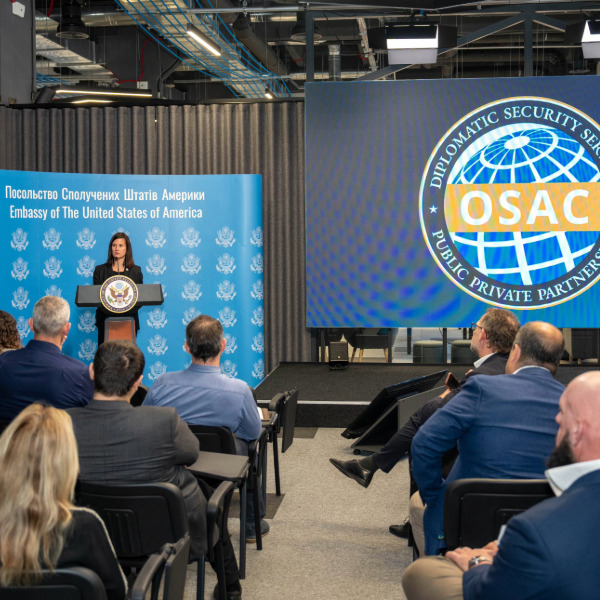
There are active OSAC Country Chapters in Kazakhstan, with regular meetings in Astana, Almaty, and occasionally Atyrau. The Country Chapters meet at least once per year, often more.
Contact OSAC’s Asia team with any questions.
Kazakhstan Travel Advisory
The current U.S. Department of State Travel Advisory at the date of this report’s publication assesses that travelers should exercise normal precautions in Kazakhstan.
Crime
The U.S. Department of State has assessed Astana and Almaty as being LOW-threat locations for crime directed at or affecting official U.S. government interests.
The U.S. Department of State has not included a Crime “C” Indicator on the Travel Advisory for Kazakhstan.
The crime emergency line in Kazakhstan is 102.
The reported numbers of incidents in all categories of crime in Kazakhstan are statistically on par with or lower than an average city in the United States. Crime does not impede the operations of U.S. private-sector organizations. According to the Bureau of National Statistics, the number of registered crimes decreased slightly from 2023 to 2024 (140,272 to 132,778, a decrease of ~5%).
Petty theft, while not common, continues to be the most likely crime against foreigners. Pickpockets tend to frequent tourist sites, open-air markets, and heavily traveled public transportation, especially buses. Other common crimes in Astana and Almaty are purse snatching, residential burglary, theft, and robbery. Be vigilant and do not carry large sums of money or valuables on the street. Financial fraud, such as ATM skimming, is prevalent.
Drunken/disorderly behavior is common, particularly in bars and nightclubs. Incidents involving assault, petty theft, robbery, driving mishaps, and violent verbal exchanges can often be traced to alcohol.
Additionally, there have been reported incidents in which foreigners have been harassed, and in some instances even assaulted, by unknown perpetrators for what the victims believed to be their involvement/relationship with local companions.
Harassment and extortion by imposters, genuine law enforcement, and other officials does occur. Never voluntarily give your wallet to anybody. If pressured by a police officer, tell the officer that you will report the behavior to the U.S. Embassy or Consulate and to the officer’s supervisors. Try to obtain the officer's name, badge number, and license plate number, and note where and when the incident happened.
The U.S. Embassy does not consider any area in Kazakhstan to be a high-crime location. Travelers in urban areas, such as those frequenting tourist sites or nightclubs, should be aware of the risk of petty crime.
Kidnapping Threat
The U.S. Department of State has not included a Kidnapping “K” Indicator on the Travel Advisory for Kazakhstan.
There is minimal risk of kidnapping in Kazakhstan.
Terrorism
The U.S. Department of State has assessed Astana and Almaty as being MEDIUM-threat locations for terrorism directed at or affecting official U.S. government interests.
The U.S. Department of State has not included a Terrorism “T” Indicator on the Travel Advisory for Kazakhstan.
The Government of Kazakhstan continues to exhibit concern about violent extremism. In addition, supporters of extremist groups such as the Islamic Jihad Union (IJU), the Islamic Movement of Uzbekistan (IMU), and al-Qa’ida (AQ) have expressed anti-U.S. sentiments and may attempt to target U.S. government or private interests in the region, including in Kazakhstan. However, the capability of these groups to conduct complex attacks within Kazakhstan has declined, though they may still inspire independent actors. Because of increased security at official U.S. facilities, terrorists may target soft targets such as commercial or residential areas, clubs and restaurants, places of worship, hotels, schools, outdoor recreation events, resorts, beaches, maritime facilities, and aircraft.
High-profile attacks in 2016 fueled fears of rising extremism in Kazakhstan, but no such trend materialized. There were no reported terrorist incidents in Kazakhstan in 2023 or 2024. Kazakh authorities have repeatedly claimed that foreign-trained terrorist groups were responsible for fomenting violence during past civil unrest, particularly in Almaty in January 2022. However, no evidence has shown that this was the case.
Many Central Asians, including Kazakhs, traveled to Syria and Iraq as foreign terrorist fighters. The Government of Kazakhstan has repatriated several hundred individuals, the majority of whom were women and children. Those who were found to have been combatants have been charged, tried, and convicted to prison sentences under Kazakh law. The rest have been placed into rehabilitation and reintegration programs in a variety of locations throughout Kazakhstan.
While the potential exists for violent extremist activity, Kazakhstan’s law enforcement agencies have demonstrated an ability to interdict such activities. In January 2019, authorities detained six suspected foreign terrorists in a raid in Almaty. Authorities found materials for improvised explosive devices, firearms, and ammunition during the raid. The group is suspected of planning attacks against civilians in public areas of Almaty; authorities believe the suspects were coordinating with ISIS. Furthermore, in August 2023, Kazakh authorities reported preventing two major terrorist attacks: a bombing attempt at a mausoleum in Turkestan and an armed attack in a crowded location in Astana.
Americans visiting and resident in Kazakhstan should be alert to any security-related announcements by Kazakh authorities.
Political Violence and Civil Unrest
The U.S. Department of State has assessed Astana and Almaty as being LOW-threat locations for political violence directed at or affecting official U.S. government interests.
The U.S. Department of State has not included a Civil Unrest “U” Indicator on the Travel Advisory for Kazakhstan. Civil unrest can develop quickly without prior notice, for example the January 2022 unrest that resulted in over 200 deaths and interrupted logistics and services. Avoid demonstration activity, as even those intended to remain peaceful have the potential to turn violent.
Elections/Political Stability
According to the Organization for Security and Co-operation in Europe (OSCE), elections in Kazakhstan consistently fail to meet international standards of impartiality, integrity, and transparency. Elections in Kazakhstan are unlikely to result in a change in political power.
Until 2022, Kazakhstan’s political system had been dominated since independence by Nursultan Nazarbayev, a former high-level Soviet official who became the country’s first elected president in 1991. He was subsequently reelected four times, most recently in 2015, although none of these elections were deemed free and fair by international observers. Nazarbayev resigned as president in March 2019 but maintained significant powers as head of Kazakhstan’s influential Security Council and chairman of the ruling party. He was succeeded by a hand-picked successor, Kassym-Jomart Tokayev, who won snap presidential elections in 2019 and 2022, although independent observers have continued to question the integrity of the election system.
In January 2022, initially peaceful protests over gas prices turned violent, fueled by an internal power struggle between elites supporting Tokayev and Nazarbayev separately. The quelling of the unrest, which resulted in over 200 deaths and some 10,000 initial arrests, allowed for a transition away from the Nazarbayev-controlled political system that had been in place in Kazakhstan for three decades.
Kazakhstan’s bicameral parliament is dominated by the Amanat (formerly Nur Otan) party. In 2017, a series of constitutional amendments devolved some powers from the executive to the legislature. Legislation passed in 2020 formalized the concept of a parliamentary opposition, but critics contend that real opposition groups have no chance of entering parliament. A constitutional referendum was held in 2022 to introduce a limited number of single-mandate districts in which candidates run in first-past-the-post elections. The most recent parliamentary elections, held in March 2023, reaffirmed Amanat’s commanding majority.
Protests & Demonstrations
Typically, civil unrest and protests have been rare. Protests against the ruling party’s dominance of the parliamentary system have been minimal. Organizers must notify city officials to hold a demonstration. Civil society activists report city officials frequently decline to allow demonstrations for a wide variety of reasons. In general, most demonstrations have involved fewer than 20 participants. Occasionally, groups have organized unsanctioned demonstrations, which are often dispersed quickly by law enforcement.
An exception to this was the unprecedented, largescale protest in Almaty and smaller protests in other cities, which devolved into violent unrest that spanned multiple days in early January 2022. A sharp increase in liquified petroleum gas prices following the government lifting of a price cap triggered protests in the oil-producing city of Zhanaozen, which has a history of labor strikes and demonstrations. The frustrations expressed by the protest inspired peaceful demonstrations in many other cities, particularly Almaty. In Almaty and other locations, as thousands joined the demonstrations, individuals opposed to Tokayev took advantage of the situation and sought to force Tokayev from power through violence.
Tokayev announced a state of emergency that extended to the whole country, authorized law enforcement to use deadly force against those committing violence, and requested the deployment of Collective Security Treaty Organization (CSTO) troops to restore government control. Following the restoration of order, President Tokayev on January 11 promised reform and acknowledged public discontent.
There have been occasional, and sometimes violent, clashes between foreign workers and their Kazakh counterparts, particularly in Atyrau, which hosts many expatriate workers. In these cases, Kazakh workers publicly complain that their wages are less than those paid to the foreign workers. Occasionally Kazakh workers in the mining and energy extraction industry have organized protests to seek higher wages, improved benefits, and better employment conditions. These protests have occasionally been against foreign companies, though not often those based in the United States.
Anti-U.S./Anti-Western Sentiment
The Kazakh government maintains a multi-vector foreign policy that seeks to have friendly relations with all major powers. The public is generally friendly with Western travelers. Western travelers are unlikely to be targets of violence during civil unrest.
Individual special interest groups in Kazakhstan occasionally accuse the United States of promoting “non-traditional” Western values in Kazakhstan, particularly with respect to human rights and civil protections for minority groups in Kazakhstan.
Law Enforcement
The national police, which has primary responsibility for internal security, falls under the authority of the Internal Affairs Ministry (MVD). Police officers are generally well equipped, prepared, and responsive. However, corruption (seeking bribes) still occurs despite efforts to improve professionalism. There are reports of security forces committing arbitrary killing, torture, and arresting political prisoners.
The Committee for National Security oversees internal and border security, as well as national security, antiterrorism efforts, and the investigation of illegal or unregistered groups such as extremist groups, military groups, unregistered political parties, religious groups, and trade unions. The committee reports directly to the president, and its chairman sits on the Security Council.
Police Response
The overall police presence is significant. MVD conscripts on compulsory military service augment regular law enforcement personnel. The size and professional caliber of police in smaller regional cities is substantially less than that of their metropolitan counterparts. Many officers are not experienced in dealing with foreigners, and rarely speak English, especially outside of Almaty, Astana, Aktau, and Atyrau.
The level of competency and professionalism of law enforcement entities may vary but does not pose a significant obstacle to the U.S. private sector or individual travelers. Police response varies depending upon location and the type of incident. Investigators often must follow procedures that seem to have little relation to the crime that was committed. Police officers have been very diligent in their efforts to solve some of the more severe forms of crimes committed against U.S. citizens.
Police have the authority to stop individuals without reasonable suspicion or probable cause. Citizens and visitors alike must present an official form of identification (e.g., passport) to an officer upon request. Many U.S. citizens, especially those who do not speak Russian, perceive identification checks as harassment. Failure to produce identification can result in detention or arrest. In some cases, the police officer’s intent is to extort money. In those very rare instances involving U.S. citizens, the Americans have been released without incident once the police become aware of their citizenship. Police continue to implement reforms to create a more professional service and curb corruption. Despite reforms, extortion from traffic police continues to be a problem.
Police officers occasionally conduct “residence checks” to verify that occupants have registered properly with the authorities. Showing a passport with a valid visa or registration card should be enough to satisfy the officer’s concerns.
Travelers with Special Considerations
For specific traveler concerns in Kazakhstan, review the local laws and circumstances on the Department of State’s Country Information Page.
Rule of Law, Arbitrary Detention, Official Harassment, Corruption, & Transparency
The U.S. Department of State has not included a Risk of Wrongful Detention “D” Indicator on the Travel Advisory for Kazakhstan.
The law prohibited arbitrary arrest and detention and provided for the right of any person to challenge the lawfulness of their arrest or detention in court. The government generally did not observe these requirements. The government frequently arrests and detains political opponents and critics, sometimes for minor infractions, such as unsanctioned assembly, that lead to fines or up to 15 days’ administrative arrest. During the year, authorities detained many persons who participated in unsanctioned protests and some pedestrians walking near protest sites.
Human rights observers reported arbitrary arrests of political opponents and activists continued throughout the year.
The law provided criminal penalties for corruption by officials, but the government did not implement the law effectively. There were numerous reports of government corruption during the year. Nongovernment observers reported several cases in which mid-level government officials were effectively and appropriately prosecuted for corruption. Nevertheless, impunity existed, especially where corruption was involved or there were personal relationships with government officials. Investigative journalists reported that political persecution and government officials’ ability to exploit legal provisions related to “false information” impeded their ability to conduct and publish reports on government corruption.
Corruption was widespread in the executive branch, law enforcement agencies, local government administrations, the education system, and the judiciary, according to human rights NGOs.
The judicial branch has limited judicial independence in practice. According to the NGO Freedom House’s Nations in Transit 2022 report, while the constitution provides for judicial independence, courts had yet to prove this independence in cases involving high-profile officials, political activists, and independent NGOs.
The law provides prosecutors with extensive authority to limit citizens’ constitutional rights. The National Security Committee (KNB), MVD, and other agencies, with the concurrence of the Prosecutor General’s Office, may infringe on the privacy of communications and financial records, as well as on the inviolability of the home. Consistent with previous years, human rights activists reported incidents of alleged surveillance, including KNB officers visiting activists’ and their families’ homes for “unofficial” conversations regarding suspect activities, wiretapping and recording of telephone conversations, and videos of private meetings being posted on social media.
Courts may hear an appeal of a prosecutor’s decision for a wiretap or surveillance but cannot issue an immediate injunction to cease an infringement. The law allows wiretapping in medium, urgent, and grave cases.
Cybersecurity
Install VPNs on electronic devices prior to coming to Kazakhstan. Once you arrive, it will be more difficult to download one. They are an invaluable tool in protecting your online activity and personal information.
Credit cards are becoming more widely accepted. Reports of ATM skimmers are more prevalent, but fraud does not appear to be a widespread problem.
Import/Export Restrictions
Kazakhstani customs authorities may enforce strict regulations concerning the export of items such as antiques. Kazakhstan also imposes restrictions on the importation of religious literature.
There are no restrictions on the import of satellite phones.
A country-specific listing of items/goods prohibited from being exported to the country or that are otherwise restricted is available from the U.S. International Trade Agency website.