





 Traveler Toolkit

Germany Country Security Report
Germany Country Security Report
Published: May 14, 2026
This report is intended to supplement the U.S. Department of State Germany Travel Advisory and Germany International Travel Information Page.
Embassy & Consulate Contact Information
Clayallee 170
14191 Berlin
Federal Republic of Germany
Tel: +49-30-8305-0
American Citizen Services: +49-30-8305-1200. Hours: 1400 – 1600, Monday – Thursday.
U.S. Consulate Dusseldorf
Willi-Becker-Allee 10
40227 Düsseldorf
Federal Republic of Germany
Tel: +49-30-8305-0
U.S. Consulate Frankfurt
Gießener Str. 30
60435 Frankfurt am Main
Federal Republic of Germany
Tel: +49-69-7535-0
U.S. Consulate Hamburg
Kehrwieder 8
20457 Hamburg
Federal Republic of Germany
Tel: +49-30 – 8305-0
U.S. Consulate Leipzig
Wilhelm-Seyfferth-Straße 4
04107 Leipzig
Federal Republic of Germany
Tel: +49-30-8305-0
U.S. Consulate Munich
Königinstraße 5
80539 München
Federal Republic of Germany
Tel: +49-89-2888-0
OSAC Country Chapter(s)
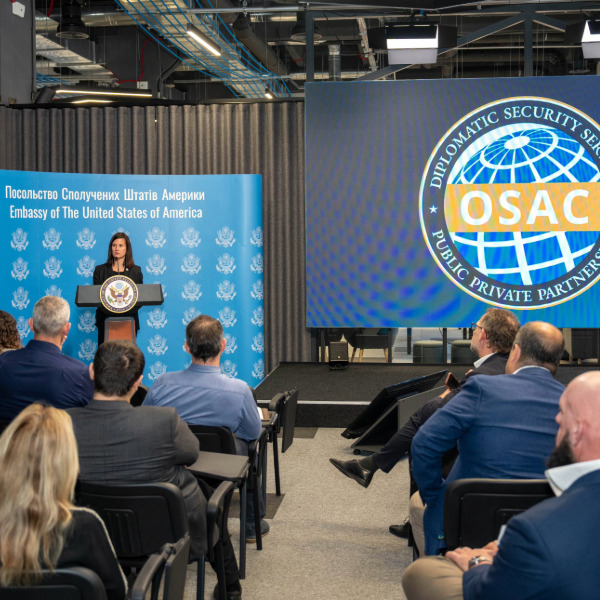
The U.S. Embassy in Berlin has consolidated the individual OSAC chapters in Berlin, Frankfurt, and Munich into one Germany Country Chapter. There are over 300 Chapter members representing 210 different private sector organizations.
Contact OSAC’s Europe team with any questions.
Germany Travel Advisory
The current U.S. Department of State Travel Advisory at the date of this report’s publication assesses that travelers should exercise increased caution (Level 2) in Germany due to terrorism.
Review OSAC’s report, Understanding the Consular Travel Advisory System.
Crime
The U.S. Department of State has assessed Berlin, Hamburg, and Frankfurt as being a MEDIUM-threat location; and Dusseldorf, Leipzig, and Munich as LOW-threat locations for crime directed at or affecting official U.S. government interests.
The U.S. Department of State has not included a Crime “C” Indicator on the Travel Advisory for Germany.
The crime emergency line in Germany is 110. Review the U.S. Department of State’s Crime Victims Assistance brochure.
Crime: General Threat
Crime rates throughout Germany are comparable to those in most developed countries, and comparative analysis of crime data for the U.S. and Germany reveals only marginal differences. According to the most recent reporting from the German Federal Criminal Police office (BKA), the total number of recorded criminal offenses increased by roughly 5% in 2025 with a total of 640,000 cases. While property crimes, including burglary rates and vehicle offenses dropped almost 20% from 2024, violent crime increased by 6% and sexual offenses rose by 13%. Juvenile offenses, specifically “debut” crimes like armed robbery and assault, also rose. Extensive information regarding reported crime statistics is available in several languages on the BKA website.
Violent crimes against U.S. nationals are relatively infrequent, but can occur, especially in larger cities or high-risk areas such as on large metropolitan subway systems and in train stations, primarily during late night or early morning hours. Visitors should carry a copy of their passport while maintaining the original in a safe location. While personal assaults do occur, there is no evidence that anti-U.S. sentiment drives such crimes.
The use of combustible gases or explosives to blow open Automated Teller Machines (ATMs) and steal the money stored inside is an increasingly frequent crime, particularity in western Germany. ATM robberies occur primarily between the hours of 0001 and 0500. ATMs with less robust security features, such as stand-alone ATMs, and those located in residential buildings, those located in rural or less densely populated suburban areas, and those located in close proximity to major highways are more frequently targeted. The blast radius from an ATM explosion can range between 200 and 500 meters.
Crime: Areas of Concern
Berlin, Hamburg, and Bremen have the highest regional crime rates in Germany, while Bavaria consistently has the lowest.
Berlin: In Berlin, increased rates of drug crimes and petty theft have been reported in Neukölln, Wedding, and Rigaer Strasse. Kreuzberg and Görlitzer Park also have a heightened risk of crimes of opportunity, especially at night. In Alexanderplatz, the Tiergarten, and near tourist sites like Checkpoint Charlie, visiting U.S. nationals are commonly victims of street scams, purse snatching, or pickpocketing; do not take “free” items from street vendors, and maintain vigilance in crowded areas. Train stations, internet cafes, crowded restaurants, and outdoor marketplaces also present a higher risk of opportunity crime. Exercise caution when congregating in known expatriate hangouts.
Munich: Oktoberfest is an annual event that brings more than six million visitors to Bavaria each fall. Security planning for this event continues to evolve each year to address emerging criminal and terrorism-related concerns, including police employing detection and counter UAS measures. Those planning to attend this and other such seasonal festivals should remain vigilant in public to mitigate the risks, including petty crime and alcohol-related incidents that accompany large, high-profile public gatherings. The official Oktoberfest App includes security information and features such as a detailed fairground map. The Munich Police X feed (@PolizeiMuenchen), also available via WhatsApp, provides its followers with helpful information, updated security incidents, and tips to avoid becoming a victim at Oktoberfest. Sexual assault directed at female attendees is of particular concern.
Frankfurt: Increased crime rates have been reported in the Bahnhofsviertel, particularly around the Hauptbahnhof (main train station), where drug use and prostitution are prevalent. Sachsenhausen, Hauptwache, Alte Oper, and Römer also present a heightened risk of crimes of opportunity due to heavy tourist traffic. Visiting U.S. nationals are commonly victims of street scams, purse snatching, and pickpocketing, with diversion or distraction tactics frequently employed - maintain vigilance in crowded areas. Train stations, shopping malls, crowded restaurants, and outdoor marketplaces present additional risk. Eintracht Frankfurt's hooligan supporters engage in violent activity including brawling with rival fans, vandalism, riots, and confrontations with police before, during, and after matches. These incidents, which may involve weapons and significant alcohol consumption, can occur citywide and not only near the stadium. Review OSAC’s reports, All That You Should Leave Behind, Hotels: The Inns and Outs, Considerations for Hotel Security, Taking Credit, and Our Two Cents: Petty Crime Basics and How to Minimize the Risk.
Kidnapping Threat
The U.S. Department of State has not included a Kidnapping “K” Indicator on the Travel Advisory for Germany.
The kidnapping rate for Germany is extremely low. However, the overall kidnapping rate fluctuates substantially when incorporating instances of human trafficking and parental abduction, the latter being by far the most significant of these figures given the number of parents with varying national origins and citizenship.
Review OSAC’s reports, Kidnapping: The Basics and Active Shooter and Kidnapping Response Tips.
Terrorism
The U.S. Department of State has assessed all cities hosting U.S. diplomatic interests in Germany as being MEDIUM-threat locations for terrorism directed at or affecting official U.S. government interests.
The U.S. Department of State has included a Terrorism “T” Indicator on the Travel Advisory for Germany, indicating that terrorist attacks have occurred and/or specific threats against civilians, groups, or other targets may exist.
Credible information indicates terrorist groups continue plotting possible attacks in Germany. Heightened tension amid conflict in the Middle East has increased the risk of terror attacks targeting U.S. institutions across Europe. European governments are taking action to guard against terrorist attacks, and most terror plots on the continent are foiled. Terrorists are increasingly using less sophisticated methods of attack—including knives, firearms, and vehicles—to more effectively target crowds. Terrorists target unprotected or vulnerable targets, such as high-profile public events, like sporting events, political rallies, holiday events; hotels, clubs, and restaurants frequented by tourists; places of worship; schools; parks; shopping malls and market; or public transportation systems.
Germany’s inaugural National Security Strategy, presented in 2023, called for defending Germany’s society against all forms of “extremism;” German officials consider racially and ethnically motivated violent extremist (REMVE) actors to be the greatest threat to domestic security. In 2025, Germany reported 55 terrorism-related arrests.
Extensive information regarding facts and trends about the terrorism threat in Germany are available in multiple languages on the BfV website.
Islamic Extremism: Three recent attacks, an IS-inspired stabbing at the Berlin’s Holocaust Memorial in February 2025, a Munich car ramming in February 2025, and a Manheim car ramming in March 2025, were attributed to Islamic extremists. The U.S. routinely shares information with its key partners to disrupt terrorist plotting, identify and act against potential operatives, and strengthen defenses against potential threats. German authorities continue to investigate extremist groups, deport or arrest individuals considered dangerous, and conduct raids on suspected groups throughout the country.
Several international terrorist groups that target U.S. government personnel and interests have a presence and operate in Germany, including ISIS, al-Qa’ida, Kongra Gel (Kurdistan Workers’ Party, or PKK), Hizb’allah, Harakat Ashab al-Yamin al-Islamiya (HAYI), and Hamas, as well as racially and ethnically motivated terrorists and anti-establishment motivated extremists. The large population of official U.S. government and military personnel in Germany creates a significant potential target for terrorist groups.
Since the October 7, 2023 Hamas terrorist attack in Israel and Israel’s subsequent reaction, there have been increased calls by terrorist organizations like ISIS and al-Qa’ida to attack targets in Europe. According to Germany’s Federal Office for the Protection of the Constitution (BfV), the Israel-Hamas conflict has fueled an increased risk of attacks that might be carried out by radicalized Islamists inside Germany. According to the BfV, much of the threat comes from radicalized lone-actor perpetrators, who could attack using knives, vehicle ramming, guns, incendiary devices, and other methods that do not require specialized knowledge, access, or training.
Lone-actors pose a serious risk due to their ability to remain undetected, at times, until operational and their willingness to attack civilian and soft targets, such as restaurants, markets/shopping malls, hotels, clubs, and other similar locations. Often, it remains unclear whether the perpetrators are driven by extremist ideology or mental illness. Preventing such offences is a special challenge, since these attacks are committed at short notice, involving only a short planning phase and little organizational effort, and often without relying on any relevant network or communication structures. In August 2024, ISIS claimed credit for a stabbing attack at a music festival in Solingen, which killed three people and injured eight others, though the attacker’s ties to ISIS remain unclear. In April 2026, a lone German national on a high-speed train from Aachen to Frankfurt deployed two incendiary devices, described as “airsoft grenades” and threatened to kill all passengers before being in locked in the train’s restroom by passengers prior to the train arriving in Bonn. The police investigation leaned toward political motives given tensions in the Gulf.
Right-Wing Extremism: In 2025, Germany saw a 4% dip in overall right-wing motivated offenses (totaling 41,072 cases). However, there was a rise in violent right-wing extremism, with authorities recording 1,521 violent crimes, an increase from 1,488 in 2024. The year was marked by high-profile counter-terrorism efforts, including the prosecution of eight members of the "Saxony Separatists" for plotting a neo-Nazi uprising and 55 terrorism-related arrests overall. In May 2025, the BfV officially classified the Alternative for Germany (AfD) as a "confirmed right-wing extremist" group, enabling heightened surveillance. This climate of tension also triggered massive national protests led to several thwarted attacks, including a plot against an asylum shelter in February and a series of vandalism incidents in Hanau in November.
Left-Wing Extremism: In 2025, left-wing extremist violence in Germany experienced a notable rise, particularly in Berlin, where incidents nearly doubled over the previous year. Authorities recorded 872 politically motivated left-wing crimes in the capital alone, contributing to a broader national trend where left-wing attacks against right-wing targets rose by more than 30% to roughly 540 cases. A significant focal point of this activity was a sustained campaign of arson, with 407 vehicles deliberately set on fire in Berlin. Beyond property damage, militants expanded their tactics to target critical infrastructure, including an attack on Berlin’s power network that left tens of thousands without electricity during the winter. Sometimes private businesses are also targeted with left-wing extremists trying to provide an ideological justification for their actions by characterizing their attacks in the context of “anti-militarism,” “anti-repression,” “anti-gentrification,” and their support for the climate protest movement. These attacks often manifest as arson or damage to vehicles, machines, and infrastructure of the businesses.
Political Violence and Civil Unrest
The U.S. Department of State has assessed Berlin and Leipzig as being MEDIUM-threat locations, and Frankfurt, Dusseldorf, Hamburg, and Munich as LOW-threat locations for political violence directed at or affecting official U.S. government interests.
The U.S. Department of State has not included a Civil Unrest “U” Indicator on the Travel Advisory for Germany. Civil unrest can develop quickly without prior notice, often interrupting logistics and services. Avoid demonstration activity, as even those planned to remain peaceful have the potential to turn violent.
Elections/Political Stability
Germany is a constitutional democracy. Citizens choose their representatives periodically in free and fair multiparty elections. The country’s 16 states exercise considerable autonomy, including over law enforcement. National elections in 2021 and 2025 were declared free and fair by international observers. German intelligence agencies warn that Moscow may continue efforts to boost extremist parties and sow doubt about the democratic process in future elections.
In recent years there has been more attention on groups of “Reichsbürger” (means “citizens of the Reich”) and “Selbstverwalter” (means “self-administrators) who, for various reasons, deny the existence of the Federal Republic of Germany and reject its legal system. A small percentage of “Reichsbürger” and “Selbstverwalter” are also right-wing extremists. In October 2022, a retired civil servant was arrested on suspicion of leading an organization that sought to bring about civil war-like conditions in the Federal Republic of Germany by committing attacks on critical infrastructure and thereby causing a massive blackout. The group also planned to abduct Federal Minister of Health. At least since November 2021, the existence of a group surrounding P. Heinrich XIII of R. has made clear the seriousness of the threat posed by “Reichsbürger”, who are current or former public employees. This group sought to overthrow the German government and replace it with their own power structure. On a planned “Day X”, the group intended to use their own military wing, which they had developed specifically for this purpose, to violently topple the German state. As a result of federal prosecutors’ investigation into the group, large-scale enforcement measures were ultimately carried out in December 2022. The suspects included active and former police officers and members of the Bundeswehr. In April 2026,
In the German federal election on February 23, 2025, the center-right alliance of the Christian Democratic Union of Germany and the Christian Social Union in Bavaria (The Union) emerged as the largest force with 28.5% of the vote and 208 seats. The far-right Alternative for Germany (AfD) achieved a historic second-place finish with 20.8%, its highest national result to date. The center-left Social Democratic Party of Germany (SPD) fell to third place with 16.4% (120 seats), while Alliance 90/The Greens secured 11.4% (85 seats). Consequently, a Grand Coalition was formed between the Union and the SPD, with Friedrich Merz elected as Chancellor on May 6, 2025, and Lars Klingbeil serving as Vice Chancellor. Election observers identified this election as free and fair.
Protests & Demonstrations
Many well-planned and publicized demonstrations protesting government policies draw thousands of participants; spontaneous demonstrations concerning education, economic concerns, and social issues occur almost daily throughout Germany. Demonstrations tend to take place on politically significant holidays like German Labor Day (May 1) and during international summits hosted in Germany. Demonstration organizers must obtain prior police approval, and police routinely oversee participants.
Demonstrations in Berlin typically take place on Unter den Linden/Pariser Platz near the Brandenburg Gate and U.S. Embassy. Climate-change activist groups like Last Generation and Extinction Rebellion continue to hold significant demonstrations, which can cause significant disruption to traffic by chaining themselves to buildings, gluing themselves or objects to buildings, or other actions. They have also directly targeted private-sector organizations, including OSAC members. No matter the theme of a given demonstration, avoid such events, as they can turn violent very quickly.
In 2025, Germany experienced its largest wave of civil mobilization in decades, with over 1.3 million people (and up to 1.8 million by organizer estimates) participating in nationwide protests against right-wing extremism. These demonstrations peaked ahead of the February 23 federal election, marked by a massive 250,000-person rally in Munich and a 160,000-person event in Berlin centered on maintaining the political "firewall" against the AfD. While the vast majority of events remained peaceful, the high tension led to recorded clashes in Dresden, where protesters violently clashed with right-wing counterprotesters.
Review OSAC’s report, Surviving a Protest.
Anti-U.S./Anti-Western Sentiment
Demonstrations with an anti-U.S. sentiment remain common in Germany but are usually nonviolent. Seventy-three percent of Germans characterize relations with the U.S. as "bad," a sharp reversal from the 74% of Germans holding a positive view just one year prior. This shift was largely driven by a widespread "2025 United States boycott.” Protests also targeted specific U.S. firms, most notably the Tesla Gigafactory in Berlin, where activists projected "Boycott Tesla" slogans onto the building and staged high-profile demonstrations against CEO Elon Musk’s political associations and environmental impact. Additionally, German authorities warned of increased risks to U.S.-linked defense companies. This shift in U.S. sentiment has not translated to U.S. individual travelers or citizens, and reports from travelers and OSAC members indicate that Germans largely distinguish between U.S. government policy and American citizens.
Law Enforcement
The Landespolizei (LPOL) is the primary law enforcement apparatus in each of Germany’s 16 states, and the agency that individuals may encounter in the cities and villages in Germany. LPOL is responsible for enforcing state laws and ordinances, responding to emergency calls for assistance, traffic enforcement and accident investigation, U-Bahn transportation security as well as criminal and counterterrorism investigations within the state.
The Bundespolizei (BPOL) is the federal police agency responsible for border security, transportation security at international airports and on S-Bahn railways, international and domestic counterterrorism response, protection of international state visitors, protection of federal properties, and federal criminal investigations.
LPOL and BPOL share responsibility for border security pertaining to over-land, international traffic. The LPOL reports to its respective state interior ministry, while the BPOL reports to the German Interior Ministry. The Federal Office for the Protection of the Constitution (Bundesamt für Verfassungsschutz - BfV), Germany’s domestic security and intelligence agency, and the state offices for the protection of the constitution (Landesamt für Verfassungsschutz - LfV), the states’ domestic security and intelligence agencies are responsible for gathering intelligence on threats to domestic order and other security functions. The BfV reports to the German Interior Ministry, and the LfVs report to their respective state interior ministries.
Germany’s postwar security architecture has a strict organizational separation between law enforcement and intelligence agencies. Privacy and data protection laws place significant limits on the collection and retention of data.
Police Response
Police response times to emergencies are similar to those experienced in the United States. Police are dispatched to emergency calls via a central dispatch center, with calls prioritized based on circumstances and availability of police units. Due to privacy laws, dispatch centers are unable to geolocate a caller’s location immediately when using a mobile telephone. The dispatcher will send the caller an SMS with a link. Clicking on this link will provide the necessary consent required for the police to then geolocate the caller’s phone. However, being able to effectively relay one’s location to police is critically important during an emergency and is often a determining factor in measuring police response times.
The emergency line in Germany is 110. This number will connect the caller to the dispatch center of the respective LPOL jurisdiction. For medical and fire emergencies, dial 112 for immediate assistance.
Transportation Security
Road Safety
Road conditions throughout Germany vary significantly from region to region, but are generally good to excellent. Road conditions can and do deteriorate quickly with rain, ice, and snow. Lack of proper lighting can also be problematic. Consequently, traffic accidents occur frequently on many major German highways; delays can last hours.
Speed limits in most German cities are relatively low. The average speed limit in cities is 50 kph (30 mph) but drops to 30 kph in most residential areas and in school zones. Police now enforce speed limits on large stretches of the Autobahn, mostly through urban areas and on stretches where road curves are more frequent. Speed limits can change significantly and immediately with limited signage on the Autobahn. Failure to abide by the speed limits may result in fines.
The leading causes of motor vehicle and pedestrian accidents involving U.S. nationals are driver error/confusion (due to unfamiliar road signs, or unusual driving customs and courtesies) and bicyclist hazards. For example, even though double parking is illegal in most German cities, the practice is an everyday occurrence on many German streets. It is very common for traffic to stop abruptly when a delivery truck parks unexpectedly in a travel lane to unload cargo, or when a German driver places their car in reverse to parallel park.
Bicyclists and bicycle traffic also pose a heightened risk for motorists and pedestrians. Many sidewalks have dedicated bike lanes. Bicycles have priority use of these lanes. Pedestrians should watch for bicyclists before crossing or stepping into bike lanes. Bicyclists also have priority over cars when turning onto side streets. Drivers should check whether a bicyclist is approaching from either direction before attempting to enter side streets, even when the light is in their favor. Drivers turning onto a side street, who strike a bicyclist using a marked bike lane are responsible for any injury or damage.
Right-of-way and yield laws are similar to those in the U.S. but can seem awkward and confusing. Apart from on a priority road (indicated with a yellow diamond on a white background sign), vehicles coming from the directional right have the right-of-way. It is also generally illegal to pass vehicles on the right side. Making a right turn on a red light is not permitted unless the intersection is marked with a fixed green arrow sign near the traffic light.
During the winter months, motorists must have winter-specific tires on their vehicles. Winter tires must have the winter tire symbol on the tire to be compliant with German law. All-weather tires without the insignia are not compliant. Motorists involved in accidents during inclement weather of snow or ice and who do not have winter tires on their vehicles will likely receive a fine and invalidated insurance coverage.
It is illegal to leave the scene of a motor vehicle accident until all parties agree that it is all right to do so, and before all parties have verified the validity of their insurance information. German authorities frequently prosecute drivers who leave the scene of an accident. It is illegal to use cell phones while driving; police can detain and fine persons engaging in this practice.
Review OSAC’s reports, Road Safety Abroad, Driving Overseas: Best Practices, and Evasive Driving Techniques; and read the U.S. Department of State’s webpage on driving and road safety abroad.
Public Transportation Safety
The use of trains, particularly the U-Bahn and S-Bahn systems, can be very convenient. Transportation centers and trains are an appealing target for criminals and terrorists. Despite enhanced security, these venues remain a soft target. Crimes are common in and around U-Bahn and S-Bahn systems and stations. Crime is often in direct proportion to the lateness of the hour.
Metered taxis are also prevalent throughout Germany. Most taxis generally accept credit cards, but travelers should confirm before confirming the ride. Rideshare apps are available in limited areas. Use common-sense safety practices such as guarding valuables and remaining aware of your surroundings on all public transportation.
Aviation Concerns
The U.S. Federal Aviation Administration (FAA) has assessed the government of Germany’s Civil Aviation Authority as compliant with International Civil Aviation Organization (ICAO) aviation safety standards for oversight of Germany’s air carrier operations.
In addition to disrupting traffic and other activities, climate change activist groups have also breached airport perimeters on multiple occasions over the last year and blocked runways or access routes to runways, causing disruptions to normal flight operations.
Review OSAC’s Report, Security in Transit: Airplanes, Public Transport, and Overnights.
Maritime Security
There are no maritime security issues unique to the operation of private-sector organizations in Germany.
Germany increased its protection for maritime infrastructure after the 2022 attacks on the Nord Stream pipeline complex, which cut three of the four subsea pipelines between Russia and Northern Europe. Since Russia’s unprovoked further invasion of Ukraine in February 2022, the German government has attempted to develop Liquified Natural Gas (LNG) import terminals to offset Russian gas deliveries and has increased security around these sites to mitigate any risk of sabotage at mission-critical energy sites.
Travelers with Special Considerations
For specific traveler concerns in Germany, review the local laws and circumstances on the U.S. Department of State’s Country Information Page.
Rule of Law, Arbitrary Detention, Official Harassment, Corruption, & Transparency
The U.S. Department of State has not included a Risk of Wrongful Detention “D” Indicator on the Travel Advisory for Germany. If you are arrested or detained, ask police or prison officials to notify the U.S. Embassy or nearest U.S. Consulate General immediately.
The constitution prohibits arbitrary arrest and detention and provided for the right of any person to challenge the lawfulness of their arrest or detention in court. The government generally observes these requirements. Police in several states have the legal authority to take preventive action against an “impending danger.” Critics argue this provision gives police excessive surveillance power, otherwise reserved for the country’s intelligence services.
The law provides criminal penalties for corruption by officials, and the government generally implements the law effectively. There have only been isolated recent reports of government corruption.
Health Concerns
The U.S. Department of State has not included a Health “H” Indicator on the Travel Advisory for Germany.
The medical emergency line in Germany is 112. Germany has good medical care and facilities, and has several university hospitals that provide state-of-the-art medical care in most fields of medicine, including advanced cardiac surgery.
If you are not a German resident, doctors and hospitals may expect immediate payment in cash.
Find contact information for available medical services and available air ambulance services on the U.S. Embassy website. The U.S. Department of State strongly recommends purchasing international health insurance before traveling internationally. Review the U.S. Department of State’s webpage on health insurance overseas.
Review the U.S. Centers for Disease Control and Prevention’s (CDC) country-specific Travel Health Notices for current health issues that impact traveler health, like disease outbreaks, special events or gatherings, and natural disasters.
See OSAC’s Guide to U.S. Government-Assisted Evacuations; review OSAC’s reports, The Healthy Way, Shaken: The Don’ts of Alcohol Abroad, Health 101: How to Prepare for Travel, and Fire Safety Abroad; and visit the U.S. Department of State’s webpage on Your Health Abroad for more information.
Vaccinations
The risk of tick-borne encephalitis (FSME in German) exists throughout southern Germany, including the Black Forest regions of Baden-Wuertemberg, Freiburg, and along the Bavarian borders with the Czech Republic and Austria. Risk also exists around Stuttgart, Heidelberg, and Nuremburg. Transmission season is March-November. Ensure vaccinations are current before prolonged stays that include hiking, camping, or similar outdoor activities in rural wooded regions. The FSME vaccine is only available in Europe and by special release in Canada. Exercise anti-tick precautions.
Review the CDC Travelers’ Health site for country-specific vaccine recommendations.
Issues Traveling with Medications
If traveling with prescription medication, visit the German customs website to ensure the medication is legal in Germany. For medications that Germany classifies as narcotics, you may only carry a 30-day supply. A comprehensive list of these medications can be found here. If your medication is on that list, there is an additional requirement for your doctor to complete a certification form. You will see part E asks for the endorsement of an “issuing authority.” As there is no such authority in the United States, travelers may have the doctor self-certify the form and enter the information of his or her practice in part E, ideally with a stamp or seal from their office. Due to Germany’s strict customs regulations, you are not allowed to receive prescription medication by mail without special permission. Always carry prescription medication in original packaging with the doctor’s prescription.
Review OSAC’s report, Traveling with Medication.
Water Quality
There are no issues with water quality in Germany, and water can be consumed from the tap.
Review OSAC’s report, I’m Drinking What in My Water?
Natural Disasters
The U.S. Department of State has not included a Natural Disaster “N” Indicator on the Travel Advisory for Germany.
Germany is a popular destination for outdoor enthusiasts. Activities include fishing, skiing, hiking, and mountain climbing. Especially in the Alps in southern Germany, alpine hazards such as avalanches and snowdrifts, landslides and flooding, glacial crevasses, falling rocks, sun exposure, and sudden weather changes are common. Although safety standards are excellent, public safety warnings are not comparable to those found in the United States. Though hiking paths and ski slopes are clearly marked, not all possibly hazardous situations will have clear warning signs, and many signs will only be offered in German.
Use caution when enjoying the outdoors. Stay on designated paths or slopes, follow the advice of local authorities, and use reputable guides, taking note of weather forecasts and conditions. Traveling or enjoying the outdoors with a group, or a minimum of at least two people when participating in mountain activities, greatly increases survivability. As always, whether alone or in a group, be sure to inform someone of your plans prior to departure including location(s) and anticipated time of return.
Cybersecurity
Cyber-related risks remain a major concern. In 2025, Germany faced an 8% increase from the previous year, with ransomware remaining the most impactful threat and DDoS attacks accounting for 77% of reported incidents. In the context of the Russian war of aggression in Ukraine, the threat was mainly posed by pro-Russian hacktivist attacks, but Chinese actors also are active inside Germany. BfV observed significant ongoing attack campaigns during 2025, especially in Europe – including Germany – but also in other Western countries, which likely originated from Chinese state cyber actors. In Germany, Chinese intelligence services focus on the fields of politics and administration, the business sector, academic research, the technology sector and the military. They also act against Chinese opposition groups. Authorities noted that 46% of attacks were traced back to Russia and China.
According to the German government, cybercriminals increasingly took the path of least resistance during the reporting period and increasingly chose victims who appeared easy to attack. The focus was no longer on maximizing the potential ransom, but on making a rational cost-benefit calculation. As a result, small and medium-sized enterprises as well as state and local administrations, scientific institutions and schools and universities increasingly fell victim to ransomware attacks.
The hacktivist groups exclusively used Distributed Denial-of-Service attacks (DDoS attacks) for this, which are designed primarily to affect the availability of internet services and cannot cause any lasting damage like ransomware attacks. DDoS hacktivism is therefore essentially a propaganda tool designed to create social insecurity and undermine confidence in the state's ability to protect and provide for the population. Russian actors in the cyber realm use cyber attacks to spread disinformation and propaganda or to support disinformation campaigns. This is also intended to advance Russian interests and weaken Western support for Ukraine. Russian cyber attacks mainly target government entities, parliaments and political figures, armed forces, media organizations, supranational organizations, political foundations, international businesses, as well as scientific and research institutions.
Review OSAC’s reports, Cybersecurity Basics, Best Practices for Maximizing Security on Public Wi-Fi, Traveling Abroad with Mobile Devices, and Guide for Overseas Satellite Phone Usage.
Counterintelligence Issues
Espionage activities against Germany by foreign powers are becoming increasingly multi-faceted and sophisticated; they encompass human sources as well as cyber-attacks. Foreign powers use their intelligence services as well as illegitimate or illegal methods and means to acquire information, exert influence, monitor their critics or pursue other interests. The main actors in espionage targeted at Germany, cyber-attacks directed by intelligence services, proliferation and influence operations are – with differing areas of focus – the Russian Federation, the People’s Republic of China, the Islamic Republic of Iran and the Republic of Türkiye.
The Federal Office for the Protection of the Constitution (BfV) and the Military Counterintelligence Service (MAD) reported a sharp rise in civilians recruited via social media for arson, surveillance, and disrupting supply lines. In October 2025, a Russian-German dual national was sentenced to six years for plotting attacks on military infrastructure and railways to undermine support for Ukraine. Authorities also recorded over 1,000 suspicious drone flights near critical sites, many launched from Russian merchant ships. German and European energy policy continues to be another focus of Russian espionage. Energy supply issues are particularly significant for Russia as an exporter of fossil fuels.
China’s intelligence services have wide-ranging powers, and they are active in Germany. China uses industrial and academic espionage, acquires partial or full ownership of German cutting-edge technology firms and engages in targeted recruitment of experts. They also focus on acquiring modern weapons technology from the defense industry. China has for years been operating an extensive system of knowledge and technology transfer to advance its civilian and military development. In these efforts it is particularly focused on emerging technologies such as quantum technology, artificial intelligence, hypersonic technology, surveillance technology or biotechnology, which have a growing military significance.
These actors’ interest in Germany translates into several risks for the private sector, including information gathering, illegal and illegitimate transfer of knowledge and technology and sabotage.
Import/Export Restrictions
Germany has strict customs regulations concerning temporary importation or exportation of firearms, military artifacts (particularly those of World War II), antiques, medications/pharmaceuticals, and business equipment. Under German law, it is also illegal to bring into or take out of Germany any literature, music, or paraphernalia that glorifies fascism, the Nazi past, or the “Third Reich.”
If traveling with prescription medication, visit the German customs website to ensure the medication is legal in Germany. Always carry your prescription medication in original packaging, along with your doctor’s prescription. For medications that Germany classifies as narcotics, you may only carry a 30-day supply. If your medication is on that list, there is an additional requirement for your doctor to complete a certification form. You will see part E asks for the endorsement of an “issuing authority.” As there is no such authority in the United States, travelers may have the doctor self-certify the form and enter the information of his or her practice in part E, ideally with a stamp or seal from their office. Due to Germany’s strict customs regulations, you are not allowed to receive prescription medication by mail without special permission.
There are no restrictions on satellite phones in Germany.
A country-specific listing of items/goods prohibited from being exported to the country or that are otherwise restricted is available from the U.S. International Trade Agency website.