


 Traveler Toolkit

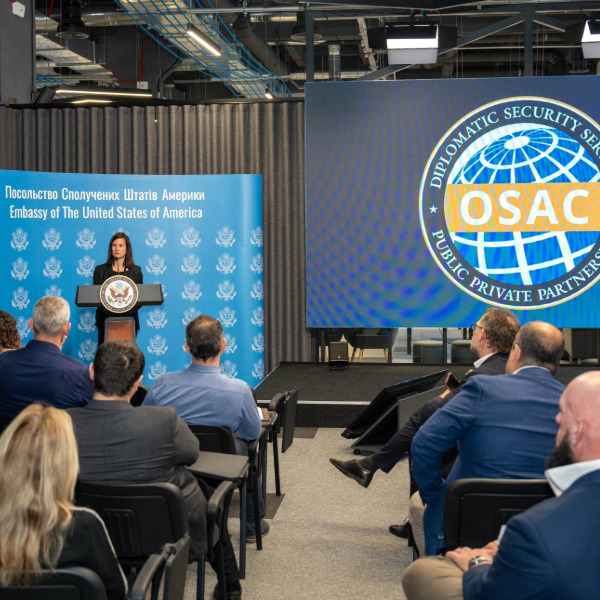

Bulgaria Country Security Report
Bulgaria Country Security Report
Published: October 1, 2026
This report is intended to supplement the U.S. Department of State Bulgaria Travel Advisory and Bulgaria Country Information Page.
Embassy & Consulate Contact Information
16, Kozyak Street, Sofia 1408
Tel: +359 2 937 5100.
Emergency After-Hours Telephone: +(359) (2) 937-5101
OSAC Country Chapter(s)
Bulgaria has an active country chapter.
Contact OSAC’s Europe team with any questions.
Bulgaria Travel Advisory
The current U.S. Department of State Travel Advisory at the date of this report’s publication assesses that travelers should exercise normal precautions in Bulgaria.
Review OSAC’s report, Understanding the Consular Travel Advisory System.
Crime
The U.S. Department of State has assessed Sofia as being a MEDIUM-threat location for crime directed at or affecting official U.S. government interests.
The U.S. Department of State has not included a Crime “C” Indicator on the Travel Advisory for Bulgaria.
The crime emergency line in Bulgaria is 112. Review the U.S. Department of State’s Crime Victims Assistance brochure.
Crime: General Threat
Bulgaria recorded 80,348 total crimes in 2025, reflecting a 6.6% decrease from 2024. The Interior Ministry solved 39,960 of these cases, representing a 47.9% clearance rate (one of the lowest in Europe). Over 86% of reported offenses were property and personal crimes, while economic offenses accounted for 13.3%. As in neighboring countries, Bulgaria has seen a general increase in “debut” crimes committed by juveniles, including minor assaults, vandalism, property crimes, and drug crime; 2025 saw a roughly 24% increase in these forms of crime.
Bulgaria saw an overall decrease in homicides in 2025, as reported by the Interior Ministry; Bulgaria’s murder rate is about 1.1 per 100,000. Violent assaults are a rare occurrence. The volume and the type of reported incidents suggest that U.S. nationals are not targets based on nationality.
The MOI continues an outreach campaign increasing awareness of crimes against tourists, allocating additional resources and training for officers on the Black Sea coast and in winter resorts during the high tourist seasons. Like other major European cities, pick pocketing and purse snatching occur regularly, especially in crowded markets, on shopping streets, near airport ATMs and aboard the busy tram and bus lines. Con artists often operate on public transportation and in bus and train stations. Pickpocketing often includes a diversion in the form of an argument or fight. Safeguard belongings when visiting cafes or restaurants and while using public transportation. Be wary of beggars and people selling trinkets and other items. ATM skimming, credit card fraud, and traffic incidents remain the most common threats to U.S. citizens in Bulgaria.
Europe’s open borders and uneven patchwork of vehicle databases make car theft relatively easy. Car thefts and break-ins are common in residential areas and in parks. Four-wheel drive vehicles and late-model European sedans are the most popular targets. Car thieves target new luxury cars, various models of SUVs, and older cars that they can dismantle and sell for parts. In the last few years, the main markets for the stolen vehicles have been the Middle East, Albania, Kosovo, Russia, and Georgia. In 2025, Bulgaria entered the Schengen Zone, lifting passport and customs controls at borders with Romania and Greece.
A trend of vehicle lock jamming has emerged, with thieves using radio frequencies to block victims’ key fobs. Jamming leaves a car unlocked despite the owner pressing the lock button. In some cases, criminals have stolen vehicles using devices that mimic an electronic key. These incidents have been prevalent at shopping centers, gas station convenience stores, and school drop-off areas. Another scam involves a suspect puncturing a victim’s tire. While the driver changes the tire, the suspect raids the vehicle.
Organizations should take measures to protect their offices. Some bank vaults and private company offices reportedly have been broken into using jamming equipment to circumvent alarm systems. Burglary is a common crime. If you plan to reside in Bulgaria on a long-term basis, take measures to protect your home and consider installing window grilles, steel doors with well-functioning locks, and an alarm system.
Document fraud is a challenge and impacts OSAC members when hiring and conducting due diligence investigations. The most common fraudulent documents are university diplomas, electronic payment documents, and identification documents. According to the Specialized Prosecutor’s Office, fraudulent documents including international passports, ID cards, various driving licenses, and various diplomas are available on the black market. In recent years, police have discovered counterfeit document and currency production centers in and around Bulgaria.
Organized crime groups exert a strong influence in some bars/nightclubs and control many prostitution rings. Pay special attention to drink prices at high-end bars and nightclubs, as there have been instances of visitors being charged exorbitant prices (several hundred dollars); in some establishments, the management may use force to secure payment. Do not purchase anything from a menu without prices.
Crime: Areas of Concern
U.S. government personnel are not prohibited from traveling to any specific areas of Bulgaria due to crime. Most criminal acts in Bulgaria take place in Sofia, although cities along the Black Sea coast, including Varna and Burgas, and popular locations in Plovdiv, Veliko Tarnovo, and Stara Zagoro, experience upticks in criminal activity during the tourist season.
Review OSAC’s reports, All That You Should Leave Behind, Hotels: The Inns and Outs, Considerations for Hotel Security, Taking Credit, and Our Two Cents: Petty Crime Basics and How to Minimize the Risk.
Kidnapping Threat
The U.S. Department of State has not included a Kidnapping “K” Indicator on the Travel Advisory for Bulgaria.
Bulgaria remains one of the primary source countries of human trafficking in the EU. Traffickers exploit Bulgarian women and girls in sex trafficking throughout Western Europe and in Bulgaria, particularly in the capital, resort areas, and border towns. Traffickers exploit Bulgarian men and boys in forced labor across Europe, predominantly in the agriculture, construction, and hospitality industries.
In 2025, there were between 60 and 80 cases of kidnapping in Bulgaria; a majority of these incidents were domestic disputes. There are no recent cases of U.S. individuals being kidnapped, but foreign travelers have been targeted in the past for kidnapping for ransom and sex-trafficking cases.
Review OSAC’s reports, Kidnapping: The Basics and Active Shooter and Kidnapping Response Tips.
Terrorism
The U.S. Department of State has assessed Sofia as being a LOW-threat location for terrorism directed at or affecting official U.S. government interests.
The U.S. Department of State has not included a Terrorism “T” Indicator on the Travel Advisory for Bulgaria.
International terrorism remains a major and imminent asymmetric threat to Euro-Atlantic countries, including Bulgaria. Terrorist groups and those inspired by such organizations are intent on attacking U.S. citizens abroad. Terrorists are increasingly using less sophisticated methods of attack – including knives, firearms, and vehicles – to more effectively target crowds. Terrorists may attack with little or no warning. They may target high-profile public events (sporting contests, political rallies, demonstrations, holiday events, celebratory gatherings, etc.); hotels, clubs, and restaurants frequented by tourists; places of worship; schools; parks; tourism infrastructure; shopping malls and markets; and public transportation systems (including subways, buses, trains, and scheduled commercial flights).
Bulgaria did not experience any terrorist attacks in 2025, and the threat of terrorism in the country remains low. However, foreign terrorist groups likely take advantage of Bulgaria’s active illicit smuggling and trafficking networks that facilitate entry into Europe from the Middle East, North Africa, and South Asia. Given Bulgaria’s strategic location as a crossroads between Europe and the Middle East, most of Bulgaria’s counterterrorism efforts focus on disrupting foreign terrorist fighter’s transit through enhanced border security activities, traveler screening, and information sharing. Migrant pressure at Bulgaria’s southern borders with Greece and Turkey from regions hosting terrorist networks—primarily Syria and Afghanistan—remains an enduring problem for the country.
The State Agency for National Security (DANS) is the lead agency for counterterrorism in Bulgaria. A separate National Counterterrorism Center, operating within DANS since 2014, aims to identify suspects, exchange information, and disrupt terrorist activities. The State Intelligence Agency also contains a small, primarily analytic counterterrorism capability and an equally small operational capability focused on threats to Bulgarian interests abroad. The Ministry of Interior contains a separate Special Weapons and Tactics team that concentrates internally on domestic threats.
Political Violence and Civil Unrest
The U.S. Department of State has assessed Sofia as being a MEDIUM-threat location for political violence directed at or affecting official U.S. government interests.
The U.S. Department of State has not included a Civil Unrest “U” Indicator on the Travel Advisory for Bulgaria. Civil unrest can develop quickly without prior notice, often interrupting logistics and services. Avoid demonstration activity, as even those planned to remain peaceful have the potential to turn violent.
Elections/Political Stability
Bulgaria held parliamentary elections in April 2026. The vote was triggered by the resignation of the Zhelyazkov government in December 2025 following widespread anti-corruption protests. It marked the country's seventh snap election since April 2021, the result of a five-year political crisis in Bulgaria.
Protests & Demonstrations
The Bulgarian constitution guarantees the right for peaceful assembly and association. Demonstrations occur frequently. They may take place in response to political or economic issues, on holidays, European football matches, and during international events. They mainly occur in downtown Sofia in the areas surrounding Parliament and the Presidency.
Between December 1 and December 10, 2025, Bulgaria experienced widespread, anti-corruption protests that brought between 50,000 and 100,000 people to downtown Sofia. Driven by intense public outrage over a highly controversial national budget and a rising cost-of-living crisis, citizens took to the streets to demand the resignation of Prime Minister Rosen Zhelyazkov. The rallies were overwhelmingly peaceful, however isolated acts of arson and violent confrontations with police broke out in downtown Sofia's in the late evening hours. Riot police used targeted force to control these elements, detaining 71 individuals explicitly tied to the violence and property damage.
Avoid areas around protests and demonstrations and exercise caution if unexpectedly found in the vicinity of large gatherings or demonstrations. Check local media for updates and traffic advisories. Messages regarding demonstrations are posted on the U.S. Embassy’s website and via the Department of State’s Smart Traveler Enrollment Program (STEP).
Review OSAC’s report, Surviving a Protest.
Anti-U.S./Anti-Western Sentiment
In general, Bulgarians tend not to hold anti-U.S. sentiment. There are, however, several political parties – namely ultra-nationalist party Vazrazhdane – and other pro-Russian organizations that regularly espouse anti-U.S. and anti-NATO rhetoric.
Law Enforcement
The MOI is the primary law enforcement body in Bulgaria, encompassing the National Police Service, Border Police, Fire and Civil Protection, Migration, and Chief Directorate for Combating Organized Crime. It oversees 28 regional police directorates and more than 180 police stations. With more than 55,000 employees, the MOI oversees a vast mission of law enforcement, national security, public order, fire safety, border security, immigration, and traffic enforcement. Most interactions U.S. nationals have with law enforcement would be with MOI employees.
The Bulgarian customs administration is a centralized administrative structure, organized within the National Customs Agency (NCS) under the Finance Ministry. NCS counteracts the contraband channels of different goods and drugs. NCS also collects all duties and excises paid to the state budget.
The National Investigative Service (NIS) is the investigative arm of the Prosecution Service, which is part of the Judiciary. It works with the Interior and Justice Ministries to conduct investigations.
The National Protection Service (NSO) provides protective security to Bulgaria’s national leadership including the president, prime minister, and visiting government dignitaries, but does not conduct criminal investigations.
The State Agency for National Security (DANS) is a domestic security agency with investigative responsibility. Since 2015, DANS has no law enforcement authority. It coordinates closely with intelligence services and law enforcement agencies depending on the nature of their investigation.
The Directorate General for Gendarmerie, Special Operations and Counter-Terrorism conducts activities related to the protection of national security and the protection of public order: preventing and intercepting terrorist acts; release of hostages; detention or disposal of particularly dangerous criminals or criminal groups; detection and neutralization of explosive devices and substances; physio-chemical research and expert assessments of explosive devices; restoration, maintenance and protection of public order in mass disturbances or crisis situations; and security of officials in the administration of state authorities in the presence of a specific threat in relation to the exercise of their functions.
Police Response
Police services in rural areas may respond more slowly than in urban areas.
The police emergency line in Bulgaria is 112.
Transportation Security
Road Safety
Road conditions are generally underdeveloped. The government plans to continue and complete the construction of new highways and renovate roadways, including main boulevards and some secondary roads in larger cities. This process causes heavier traffic and could lead to more road accidents. Heavy truck traffic along the routes from the Greek border at Kulata to Sofia, and from the Turkish border at Kapitan Andreevo to Plovdiv, creates numerous hazards. Expect delays at non-EU land border crossings.
Travel conditions deteriorate during the winter, as roads become icy, and potholes grow. Traffic difficulties occur even more on small streets in Sofia, where no plows clear snow and residents often choose four-wheel-drive vehicles for winter driving. Rockslides and landslides occur in the mountains and Black Sea area.
Aggressive driving habits, the lack of safe infrastructure, and the mixture of older vehicles, livestock, and animal-drawn carts on the roads contribute to road accidents and fatalities.
Avoid confrontations with aggressive drivers. In particular, drivers of luxury vehicles tend to speed and drive erratically. Violent altercations are possible following accidents.
Bulgarian police recently began enforcing a provision in Bulgarian law requiring U.S. nationals to provide a certified, translated copy of their U.S. driver’s license in addition to an international driving permit.. Drivers operating motor vehicles must obey the signals given by traffic police officers. Pay all fines for traffic violations either electronically or via bank transfer.
Avoid leaving valuables in plain view, especially in cars with foreign license plates, and exercise caution while stopping at gas stations, motels, or roadside restaurants. Insure cars against theft with a major insurance company. Thieves have stolen cars left running during cold weather. When leaving a vehicle unattended in a public location, take extra care to ensure that you lock the door and move valuables out of plain view.
Traffic police officers may issue spot fines for minor traffic violations, e.g. failure to have adequate driver’s license documentation, payable by mobile/handheld credit/debit card devices. Police will not accept cash for any reason.
Review OSAC’s reports, Road Safety Abroad, Driving Overseas: Best Practices, and Evasive Driving Techniques; and read the U.S. Department of State’s webpage on driving and road safety abroad.
Public Transportation Safety
Sofia’s metro system and the extensive bus network are reliable modes of transportation.
Taxi cabs are plentiful but are known to overcharge passengers. Insist on use of the meter when using a taxi.
Aviation Concerns
Airline transportation is reliable, and there have been no registered airplane accidents in the past 30 years. The national carrier, Bulgaria Air, is compliant with the safety standards of the International Civil Aviation Organization. There are few reports of thefts, scams, ATM skimming, or pickpocketing at the four major airports (Sofia, Plovdiv, Burgas, and Varna).
Review OSAC’s Report, Security in Transit: Airplanes, Public Transport, and Overnights.
Maritime Security
There are no unusual maritime security concerns in Bulgarian waterways.
Travelers with Special Considerations
For specific traveler concerns in Bulgaria, review the local laws and circumstances on the U.S. Department of State’s Country Information Page.
Rule of Law, Arbitrary Detention, Official Harassment, Corruption, & Transparency
The U.S. Department of State has not included a Risk of Wrongful Detention “D” Indicator on the Travel Advisory for Bulgaria.
The constitution and law prohibit arbitrary arrest and detention and provide for the right of any person to challenge the lawfulness of their arrest or detention in court. The government generally observed these requirements, but there are occasional reports of arbitrary arrest and detention. If you are arrested or detained, ask police or prison officials to notify the U.S. Embassy immediately.
Corruption remains an important concern of the Bulgarian government. You may refer complaints of public corruption by e-mail to the Ministry of Justice at anticorruption@justice.government.bg or by phone to +359 2 987 0697. All grievances must be submitted in the Bulgarian language.
According to a Basel Institute of Governance survey released in May 2023, the judicial system, the public health system, and police were most affected by corruption. The National Assembly passed a whistleblower protection law in January 2023, and as part of a larger legislative package aimed at curbing government corruption, a May 2023 law created an accountability mechanism for the prosecutor general and the deputy prosecutor generals. In September 2023 parliament passed legislation to enhance the effectiveness of the country’s anti-corruption commission.
The European Commission acknowledged the new legislation was a positive step but noted “a continuous issue” with poor effectiveness of investigations and a weak track record of prosecution and final convictions in high-level cases of corruption. It also asserted there were serious legal gaps regarding integrity of top executive functions such as “persons hired for ministers’ private offices.” Transparency International Bulgaria asserted the lack of transparent use of public resources, attacks against civil society, and unregulated lobbying in the legislature were factors contributing to corruption.
Health Concerns
The U.S. Department of State has not included a Health “H” Indicator on the Travel Advisory for Bulgaria. Review the U.S. Centers for Disease Control and Prevention’s (CDC) country-specific Travel Health Notices for current health issues that impact traveler health, like disease outbreaks, special events or gatherings, and natural disasters.
The medical emergency line in Bulgaria is 112. Dispatchers are likely to speak English, and ambulances will usually transport a patient to a private hospital of their choosing. Ambulance service can be slow; in large cities, it may take 30+ minutes. If there is a medical emergency in Sofia, it may be quicker to call a taxi or ask a friend or colleague to drive you to a hospital. Medical providers are trained to a very high standard, but most hospitals and clinics, especially in rural areas, are not equipped or maintained to U.S. or Western European standards. Basic medical supplies and over-the-counter and prescription medications are widely available, but highly specialized medication and/or treatment regimens may not be available. Those in need of specialized services for an infant/child should call ahead to ensure those services will be available.
In 2025, Bulgaria purchased 3 air-ambulance helicopters through EU assistance. These helicopters are designed for emergency transport.
Serious medical problems requiring hospitalization and/or medical evacuation to the U.S. may cost tens of thousands of dollars. It is imperative that U.S. nationals have enough cash (or access to cash) to cover a medical emergency. Most doctors and hospitals expect immediate cash payment for services rendered.
Find contact information for available medical services and available air ambulance services on the U.S. Embassy website. The U.S. Department of State strongly recommends purchasing international health insurance before traveling internationally. Review the U.S. Department of State’s webpage on health insurance overseas.
See OSAC’s Guide to U.S. Government-Assisted Evacuations; review OSAC’s reports, The Healthy Way, Shaken: The Don’ts of Alcohol Abroad, Health 101: How to Prepare for Travel, and Fire Safety Abroad; and visit the U.S. Department of State’s webpage on Your Health Abroad for more information.
Vaccinations
Stay up to date with the vaccines recommended by the U.S. Centers for Disease Control and Prevention.
Review the CDC Travelers’ Health site for country-specific vaccine recommendations.
Issues Traveling with Medications
Always carry your prescription medication in original packaging, along with your doctor’s prescription. Check with the Bulgaria Customs Agency to ensure the medication is legal in Bulgaria.
Review OSAC’s report, Traveling with Medication.
Water Quality
Water quality differs by location in Bulgaria. Bottled water is a safe alternative to tap water.
Review OSAC’s report, I’m Drinking What in My Water?
Natural Disasters
The U.S. Department of State has not included a Natural Disaster “N” Indicator on the Travel Advisory for Bulgaria.
The air quality varies considerably and fluctuates with the seasons. It is typically at its worst in the winter.
Cybersecurity
ATM skimming, credit card fraud, computer hacking, ransomware-related incidents, business e-mail compromise cases, and other electronic intrusions are known risks in Bulgaria. Europe’s southeastern region poses significant cyber threats. Most common victims of computer-related fraud are companies that trade entirely on the Internet.
Bulgaria is a key target for cybercrime because of its advanced internet infrastructure, high number of users, and payment systems. Sofia, Plovdiv, Varna, and Bourgas host many research and development centers, centers of excellence, software development hubs, service and shared centers for leading global companies and manage 24/7 international operations. Bulgaria’s rapid development in the latest IT, AI, big data, and communication also triggers significant cybercrime interest. According to the U.S. International Trade Administration, around 57%of Bulgarian organizations were subject to cyberattacks daily or monthly, highlighting the need for robust cybersecurity measures.
In 2023 and 2024, Bulgaria experienced notable developments in cybercrime, impacting businesses and prompting governmental responses. Since early 2024, over 80 Bulgarian companies reported cybercrimes involving the unauthorized switching of their International Bank Account Numbers (IBANs). These incidents resulted in approximately €12 million in losses. The Bulgarian government adopted the “Cyber Resilient Bulgaria 2020” strategy to enhance protection for citizens, businesses, and critical infrastructure.
According to U.S. law enforcement, Bulgarian criminals have a significant role in ATM and credit card skimming-related fraud around the world. Until recently, Bulgarian transnational organized criminal groups manufactured skimming devices and sent teams to other countries to skim credit cards. These groups would then send the proceeds back to their Bulgarian bosses. There was only a moderate amount of the actual skimming of credit cards in Bulgaria, and these were usually to evaluate the devices prior to deploying them abroad. This trend has changed over the past few years, as Bulgarian criminal groups have increased their operations dramatically domestically and abroad. As a result, ATM skimming in Sofia, Varna, and Burgas has increased several-fold. Criminal groups target high-volume ATMs, usually around tourist areas or shopping centers. Protect your PIN, although that does not eliminate the risk. Use ATMs inside trusted banks and similar institutions, and limit use of credit cards to trusted retailers and institutions. Closely monitor your bank statements for anomalies. Destroy personally identifiable information by shredder or similar method.
Review OSAC’s reports, Cybersecurity Basics, Best Practices for Maximizing Security on Public Wi-Fi, Traveling Abroad with Mobile Devices, and Guide for Overseas Satellite Phone Usage.
Counterintelligence Issues
Russian intelligence continues to treat Bulgaria as a theater for espionage and hybrid operations. The Kremlin has shifted to decentralized asset networks, often hiring locals; In 2025, multiple Bulgarian nationals were convicted of operating a sophisticated, million-euro "spy-for-hire" ring on behalf of Russia. Take constructive measures to guard any and all information you do not want released to foreign adversaries or business competitors. Take every necessary precaution to prevent your information from spillage, including avoiding public Wi-Fi, using VPNs, and not bringing extremely sensitive information to the country in the first place.
Import/Export Restrictions
If you plan to import an automobile to Bulgaria, be aware that customs duties on personal vehicles can be high. All documents must be originals or certified copies and contain an apostille.
The use of satellite phones and satellite communication devices is regular by the Bulgarian Communications Regulation Commission (CRC). Individuals or companies wishing to use satellite phones must ensure they have the necessary authorization or permits from Bulgarian authorities, and that their use is compliant with local telecommunication laws. Importers need to ensure the devices meet the necessary technical standards required by the Bulgarian regulatory authorities. The use of satellite phones may be limited in certain government or military areas where communication security is a concern, and their use is sometimes monitored by security agencies to prevent misuse in espionage or illicit activities. Using unauthorized satellite communication devices or operating them without the proper registration could lead to legal penalties, including fines or confiscation of the devices.
A country-specific listing of items/goods prohibited from being exported to the country or that are otherwise restricted is available from the U.S. International Trade Agency website.