





 Traveler Toolkit
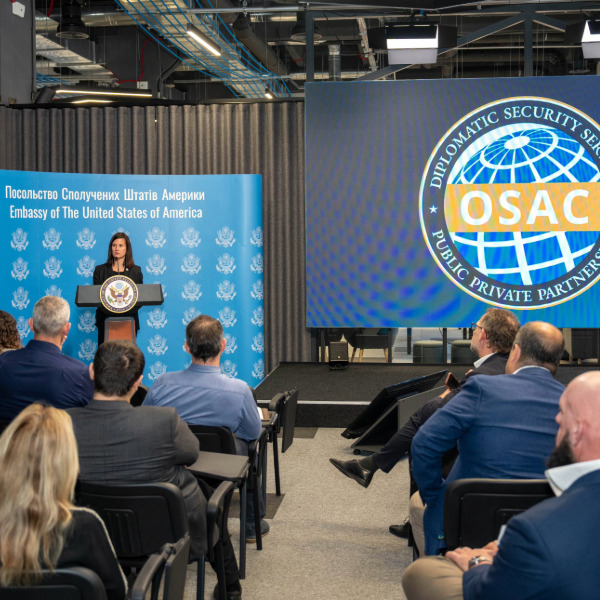

Georgia 2018 Crime & Safety Report
Georgia 2018 Crime & Safety Report
According to the current U.S. Department of State Travel Advisory at the date of this report’s publication, Georgia has been assessed as Level 1. Exercise normal precautions. Do not travel to the Russian-occupied regions of South Ossetia and Abkhazia due to civil unrest, crime, and landmines.
Overall Crime and Safety Situation
U.S. Embassy Tbilisi does not assume responsibility for the professional ability or integrity of the persons or firms appearing in this report. The American Citizens’ Services unit (ACS) cannot recommend a particular individual or location, and assumes no responsibility for the quality of service provided.
The U.S. Department of State has assessed Tbilisi as being a HIGH-threat location for crime directed at or affecting official U.S. government interests.
Please review OSAC’s Georgia-specific page for original OSAC reporting, consular messages, and contact information, some of which may be available only to private-sector representatives with an OSAC password.
Crime Threats
Crime continues to be a concern despite the establishment of a professional law enforcement presence and active enforcement. According to official statistics, there was a small decrease in criminal cases in 2017, compared to 2016. However, financial crimes increased in 2017.
Crimes against U.S. citizens and other Westerners are reported. The number of crimes reported to the U.S. Embassy involving U.S. citizens in 2017 was similar to that of 2016 and included reports of aggravated assault, sexual assault, and robbery.
There continue to be reports of nuisance street children who beg from, hassle, and behave aggressively toward foreigners, with a seemingly increased level of aggression.
Organized crime has been on the wane since the adoption of harsher legislation more than 10 years ago. As a result, most organized crime involving Georgians now transpires outside of Georgia. However, street gangs and drug dealers continue to be a problem. These do not specifically target foreigners.
Crimes involving weapons remained a concern in 2017, including armed robberies and assaults involving firearms. In 2017, an emphasis on enforcement by Georgian authorities resulted in significant seizures of illegally possessed weapons, including handguns, rifles, hand grenades, and rocket propelled grenade launchers. The numbers of weapons seized reflects the overall number of weapons in circulation and the fact that Georgia is a post-conflict nation with large amounts of weapons remaining in country after the fall of the Soviet Union and two internal conflicts (Abkhazia and South Ossetia).
The government is working to arrest and prosecute document vendors; however, the penalties for these types of crimes are minimal. Therefore, fraudulent bank documents, employment records, and fake seals and stamps are common. Government offices easily identify fraudulent civil documents. Despite this, fraudulent civil documents are readily available and still encountered.
Financial crimes in the form of credit card fraud against individuals and larger targeted attacks against banks and other financial institutions are not uncommon. Georgian law enforcement agencies put substantial resources into combatting financial crimes in 2017 and made several significant arrests. For more information, please review OSAC’s Report, “The Overseas Traveler’s Guide to ATM Skimmers & Fraud.”
Other Areas of Concern
The Department of State strongly warns U.S. citizens against travel to the Russian-occupied regions of South Ossetia and Abkhazia. These regions are not under the control of the Georgian government, and tensions remain high between the de facto authorities in Abkhazia and South Ossetia and the Georgian government. Russian troops and border guards continue to occupy both regions. Entering the occupied regions without proper documentation can lead to arrest, imprisonment, and/or fines by Russian, Georgian, or de facto officials. U.S. Embassy personnel are restricted from traveling to Abkhazia or South Ossetia, even in the case of emergencies involving U.S. citizens.
Transportation-Safety Situation
For more information, please review OSAC’s Report, “Security in Transit: Airplanes, Public Transport, and Overnights.”
Road Safety and Road Conditions
Driving can be extremely hazardous. Local drivers pay little attention to speed limits or lane discipline and regularly encroach into oncoming traffic. Despite a zero tolerance law in regards to drinking and driving, intoxicated drivers are a problem, especially in the evenings and on holidays. Post strongly advises drivers to maintain an acute level of situational awareness, drive defensively, and wear seatbelts. Georgian law requires use of seat belts in the front seats.
The Embassy does not recommend travel between cities after sundown due to insufficient lighting and poor road conditions. There is also a heightened vulnerability to crime during vehicle malfunctions or stops.
Another concern is free-ranging livestock on the roads, which may pose a danger to drivers.
There is little access to emergency medical services outside of the capital of Tbilisi. The effectiveness of emergency response to traffic accidents is based on resources, or lack thereof, and the level of training among medical personnel varies.
Public Transportation Conditions
The Embassy advises caution in the use of the underground Metro, marshrutka mini-buses, and any other form of public transportation.
The government poorly regulates the taxicab industry, and foreigners are often charged rates higher than those of local residents. The Embassy advises staff to negotiate a fare before using a local taxi. The majority of taxi drivers are private individuals who use their private vehicles as unofficial cabs as a source of income. Since the government does not regulate these taxis, the Embassy advises staff to use an official taxicab company. Several established taxicab companies exist with English-speaking dispatchers. Established taxicabs use fare meters, have permanent painted exteriors (listing their phone number and cab company name), and use dispatchers. Many of the major hotels in Tbilisi and Batumi offer their own private cab services or can refer guests to a trusted service provider. Passengers should instruct taxi drivers to slow down if they do not feel comfortable with the operating speed.
Terrorism Threat
The U.S. Department of State has assessed Tbilisi as being a MEDIUM-threat location for terrorist activity directed at or affecting official U.S. government interests.
Local, Regional, and International Terrorism Threats/Concerns
Georgia’s proximity to Iran, Turkey, Azerbaijan, and the Russian North Caucasus region (all of which have seen some measure of terrorist-related activity in the last three years) continues to be of concern. While Georgia has made strides with respect to border control and integrity, its geographic location makes it a natural transit area for individuals from these regions. Foreign fighters from Georgia, or who transited Georgia, have joined ISIS and other terrorist groups in Syria in 2017.
In 2015, Georgia enacted a Law on Combating Terrorism, a substantive updating and expansion of its counter-terrorism legislation. On November 21, 2017, Georgian security forces were involved in a counterterror operation against suspected Islamic extremists sheltering in an apartment building in Tbilisi’s Isani neighborhood. The nearly day-long operation resulted in the arrest of one terrorist suspect and the death of three others; one member of the Georgian security forces was also killed, and four others were injured.
Anti-American/Anti-Western Sentiment
The country faces two separate and distinct streams of anti-American sentiment: U.S.-Russian relations and anti-American rhetoric that originates within small Islamist groups. There have been no direct cases of violence that can be solely attributed to anti-American/anti-Western sentiment.
There is a sizeable minority who prefer alignment with Russia. Further, the country continues to deal with the geopolitical effects from the 2008 war with the Russian Federation.
Georgia’s population is 10% Muslim, which is concentrated in several areas adjacent to predominantly Muslim countries or territories. While there have been no direct threats against U.S. interests by Georgian-based Islamist groups, some members of these groups have traveled to Syria/Iraq to fight on behalf of ISIS. A small number of Islamist groups in Georgia openly support these fighters.
Political, Economic, Religious, and Ethnic Violence
The U.S. Department of State has assessed Tbilisi as being a HIGH-threat location for political violence directed at or affecting official U.S. government interests.
There is no known threat of political violence directed specifically against U.S. citizens.
In August 2008, an exchange of gunfire/artillery between Georgian and separatist forces in South Ossetia escalated into a full-blown war between Georgia and Russia. Russian forces systematically attacked Georgian military targets and occupied key locations, most notably Gori. Russian military actions virtually severed movement and access between eastern and western Georgia. Russian forces pulled most of their forces back into the separatist-controlled territories of Abkhazia and South Ossetia, but the areas in/contiguous to these regions have seen periodic shootings, kidnappings, remotely-detonated car bombings, booby-traps, and other acts of violence that have primarily targeted Georgian police or other officials, but have also targeted civilians and international observers/diplomats. Russian forces are stationed in Abkhazia and South Ossetia, including the Akhalgori region of South Ossetia (which was occupied only in 2008 and was not previously part of the conflict zone) and the Kodori Gorge area of Abkhazia, which was controlled by the Georgian government before the 2008 war. Russian forces withdrew from Perevi, near the administrative boundary line with South Ossetia, in November 2010.
In 2016, three days prior to Parliamentary Elections, there was an assassination attempt against a prominent political leader.
On the evening of October 4, 2016, a car bomb exploded in front of the United National Movement (UNM) political party’s office on Kolmeurne Square, near Rustaveli Avenue and Freedom Square. The suspected target of the attack was a senior UNM official.
Civil Unrest
In 2017, large political rallies/marches were held in downtown Tbilisi. The rallies drew large crowds and significantly affected traffic and pedestrian movement in the area at that time. Although the rallies caused some logistical difficulties for businesses in the area, no violence was reported; in addition, there was no demonstrable effect on the safety and security of U.S. citizens in Tbilisi.
As a rule, U.S. citizens are encouraged to avoid areas of demonstrations, and exercise caution near large public gatherings when possible, as even demonstrations intended to be peaceful can turn confrontational and escalate into violence.
Religious/Ethnic Violence
Though rare, violence or threatening behavior motivated by religious or ethnic differences occasionally occurs. The Prime Minister and other leaders have stated the government will not tolerate religious or ethnic prejudices and in the past have condemned such acts.
Post-specific Concerns
Environmental Hazards
Georgia is situated in a seismic zone. Since 1800, more than 350 earthquakes of 6.0 or less (on the Richter Scale) have occurred. The most recent significant seismic activity was a minor tremor on September 17, 2013, in the neighboring Russian Republic of Dagestan. The U.S. Geological Survey reported that the quake measured a 5.3 and its epicenter was 21 kilometers (13.05 miles) north of Gvareli, Georgia.
The weather in the mountains can change quickly, even in the summer months, with low overnight temperatures and unexpected snowstorms. There have been reports of hikers getting lost in the mountains in snowy/stormy weather, and there have been fatal accidents.
There are eight known venomous snake species that are more likely to be encountered between March-October. For more information, please review OSAC’s Report “When Wildlife Attacks.”
Critical Infrastructure
The government has enacted laws to ensure that new construction meets seismic standards, but enforcement is uneven. Many buildings, both new and old, have inadequate anti-seismic construction.
Economic Concerns
Foreigners should safeguard sensitive information. Pirated software, music, and films are widely available on the black market.
Personal Identity Concerns
There continue to be periodic reports of violence and intimidation against foreigners in bars, nightclubs, and similar venues, especially against members of the LGBT community.
Drug-related Crimes
Georgia is a transit point and an end-use destination for various illicit drugs. In 2007, the government adopted a national Anti-Drug Strategy, increased penalties for drug offenses, and adopted anti-drug legislation. The government is continuing efforts to increase border security with the support of the U.S. government, the EU, and international donors. Since 2014, Georgia began to put a special emphasis on countering narcotics trafficking through Georgia and created a special police division to combat international narcotics trafficking.
Georgia’s Constitutional Court abolished the mandatory prison sentence for marijuana use and possession (up to 70 grams); however, courts will still impose administrative fines. Harsh penalties remain in effect for marijuana distribution and for all other illegal narcotics use, possession, and distribution.
Kidnapping Threat
The threat to U.S. citizens of kidnapping exists. In recent years, instances of kidnappings have been significantly reduced, with no recent reported instances of bridal or parental abductions involving U.S. citizens.
Police Response
In general, police are attentive and responsive to requests/calls for assistance from foreigners and U.S. citizens in particular. However, much of their effectiveness is based on resources, or lack thereof, and the level of training among officers varies. Police response in Tbilisi can range from several minutes to more than one hour. Police response outside of Tbilisi can be considerably longer.
Emergency services will respond to the best of their ability, but terrain, road, and weather conditions, and limited resources could severely affect response times.
Georgia’s customs authorities enforce regulations concerning the temporary import/export of items such as alcohol, tobacco, jewelry, religious materials, art or artifacts, antiquities, and business equipment.
Although there has been much progress in the government's efforts to reform the police organizations and improve overall professionalism, work remains to effectively deter criminal activity and conduct effective post-incident investigations.
How to Handle Incidents of Police Detention or Harassment
U.S. citizens who have been detained or harassed by the police should contact the U.S. Embassy's American Citizen Services unit in the Consular Section at the following numbers:
Embassy Main & Emergency Number: (995) (32) 227-70-00 {24/7}
American Citizen Services: (995) (32) 227-77-24
Crime Victim Assistance
The Consular Section has information available to assist victims of crime seeking assistance from local police, medical attention, finding a local attorney, contacting family or relatives in the U.S., and contacting airlines regarding travel arrangements. For local first responders, please refer to the Embassy’s Emergency Assistance page.
You may contact the police through the general emergency phone number: 112.
Police/Security Agencies
The most visible police presence is that of the Patrol Police, who patrol in marked vehicles throughout the country and increase their visibility by patrolling with their emergency lights on.
The Protection Police are visible throughout the larger cities of Georgia near government buildings and crowded tourist areas.
Medical Emergencies
Western-standard medical care is limited, but healthcare continues to improve. There is a shortage of medical supplies and capabilities outside Tbilisi and Batumi. Elderly travelers and those with pre-existing health problems may be at risk due to inadequate medical facilities.
The Embassy recommends traveling with your prescription medication. Many medicines that are legal in the U.S. may be considered controlled/illegal in Georgia. A recent increase in enforcement (and related detentions) of U.S. citizens related to the possession and importation of controlled substances has been noted. For more information, please refer to OSAC’s Report, “Traveling with Medications.”
Medical services in Abkhazia and South Ossetia are extremely limited. Hospitals have little to no infectious disease control and lack medicine.
For all general emergencies, call 112.
Contact Information for Available Medical Services
For medical assistance, please refer to the Embassy’s Medical Assistance page.
Available Air Ambulance Services
There are no commercial airports in either region, making air ambulance evacuations for medical emergencies impossible. Insurance providers offer 24/7 air ambulance service and emergency medical assistance if deemed required by local medical professionals.
Insurance Guidance
Doctors and hospitals often expect immediate cash payment before rendering medical services. Hospitals do not accept credit cards or medical insurance. The Embassy highly recommends both short- and long-term travelers purchase overseas medical insurance and medical evacuation insurance. Two overseas medical insurers used by U.S. citizens are:
International SOS, www.internationalsos.com (1-215-942-8000)
MEDEX Assist, www.medexassist.com (1-800-732-5309).
Country-specific Vaccination and Health Guidance
The Embassy strongly recommends travelers who visit for at least two weeks get the Hepatitis A vaccine and the pre-exposure rabies vaccine series. Tuberculosis is a serious health concern. Travelers are also encouraged to bring medicine to treat diarrhea, which regularly afflicts newcomers. Travelers should take care that food is cooked thoroughly to reduce the risk of food-borne illness.
Anti-venom is available for some species of snakes in a small number of facilities. Treat all snakes as potentially venomous.
The CDC offers additional information on vaccines and health guidance for Georgia.
OSAC Country Council Information
The Country Council in Tbilisi is active, meeting quarterly. Interested private-sector security managers should contact OSAC’s Europe Team with any questions.
U.S. Embassy Location and Contact Information
Embassy Address and Hours of Operation
11 George Balanchine Street, Didi Dighomi, Tbilisi 0131
U.S. Embassy hours of operation are Monday-Friday 0900-1800
Embassy Contact Numbers
Embassy Main & Emergency Number: (995) (32) 227-70-00 {24/7}
Website: https://ge.usembassy.gov/
Embassy Guidance
The U.S. Embassy enjoys an excellent, cooperative relationship with the government of Georgia, through which it stays abreast of crime, safety and terrorism related issues.
U.S. citizens traveling to Georgia should register with the Smart Traveler Enrollment Program (STEP) to ensure they receive pertinent security updates and notices.
Additional Resources
Georgia Country Information Sheet