





 Traveler Toolkit


Laos Country Security Report
Laos Country Security Report
Published: November 2, 2026
This report is intended to supplement the U.S. Department of State Laos Travel Advisory and Laos International Travel Information Page.
Embassy & Consulate Contact Information
Ban Somvang Thai Thadeua Road, Km 9 Hatsayfong district, Vientiane
Tel: +(856) 21-48-7000
After-hours Emergencies: +856-21-487-000
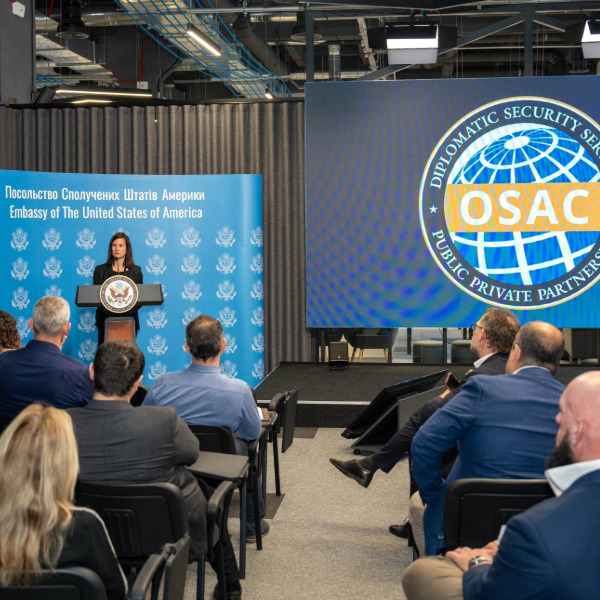
OSAC Country Chapter
The Regional Security Office (RSO) is in the process of revitalizing the OSAC Laos Country Chapter. Individuals interested in participating in the Country Chapter or contacting the RSO should reach out to OSAC’s Asia team.
Contact OSAC’s Asia team with any questions.
Laos Travel Advisory
The current U.S. Department of State Travel Advisory at the date of this report’s publication assesses that travelers should exercise increased caution in Laos due to crime, civil unrest, and unexploded ordnances.
Reconsider travel to Xaisomboun Province due to civil unrest and a continued threat of violence.
Exercise increased caution in areas along the border with Burma, Savannakhet, Xieng Khouang, Salavan, Khammouane, Sekong, Champasak, Houaphanh, Attapeu, Luang Prabang, and Vientiane provinces, along Route 7 (from Route 13 to the Vietnam border), Route 9 (Savannakhet to the Vietnam border), and Route 20 (Pakse to Salavan) due to crime. Transnational criminal organizations, narcotics traffickers, and armed bandit groups operate in these border and transit corridors, along with armed factions resisting neighboring regimes.
Exercise increased caution in areas of Savannakhet, Xieng Khouang, Salavan, Khammouane, Sekong, Champasak, Houaphanh, Attapeu, Luang Prabang, and Vientiane provinces, as well as along Route 7 due to legacy unexploded ordnance from past conflicts.
Crime
The U.S. Department of State has assessed Vientiane as being a HIGH-threat location for crime directed at or affecting official U.S. government interests.
The U.S. Department of State has included a Crime “C” Indicator on the Travel Advisory for Laos, indicating that there may be widespread violent crime and/or organized crime present in the country, and/or that local law enforcement may have limited ability to respond to serious crimes.
The crime emergency line in Laos is 1191.
Crime: General Threat
Vientiane is a relatively safe city compared to most cities of comparable size in the United States. However, there is significant risk from crime in the capital. Criminals do not target U.S. citizens based on nationality but do frequently target foreigners for crimes of opportunity. Although these criminals tend to focus on areas tourists frequent, they can strike anywhere in the city at any hour of the day or night.
The most common crimes include theft of unattended property, pickpocketing, residential burglaries, and opportunistic drive-by bag snatchings committed by thieves operating on motorbikes or scooters. Criminals routinely exploit homes with weak perimeter security—such as ground-floor accessible windows, unlocked gates, or the absence of a professional guard force—operating both during daytime hours and late at night. Petty theft rates regularly spike during major Lao holidays, including Pi Mai Lao (Lao New Year in mid-April), Boun Awk Phansa, and That Luang Festival.
While violent crime targeting foreign nationals remains relatively uncommon, there are credible reports of an uptick in armed incidents and robberies involving knives, blunt instruments, and increasingly firearms.
In popular tourist destinations (such as Vang Vieng, Luang Prabang, and Si Phan Don), vehicle rental scams are common. Disreputable vendors may rent motorbikes to visitors, dispatch an associate to secretly repossess the bike using a spare key, and demand steep financial reimbursement for the “stolen” vehicle. Expatriates and travelers should exercise extreme caution, verify reputable rental shops, and never surrender their passport as collateral.
Crime: Areas of Concern
Transnational organized crime syndicates operate large-scale cyber-fraud call centers and illegal gambling compounds within designated Special Economic Zones (SEZs) across Laos. The most notorious enclave is the Kings Romans / Golden Triangle Special Economic Zone (GTSEZ) located in Bokeo Province along the Mekong River, alongside emerging facilities in the Boten Beautiful Land SEZ (Luang Namtha Province on the China-Laos border), and peripheral nodes in Savannakhet and Champasak.
Multiple governments—including Australia, South Korea, Malaysia, Singapore, the Philippines, Sri Lanka, India, the United Kingdom, and the United States—have issued explicit warnings regarding fraudulent international employment schemes operating in these enclaves. Syndicates use deceptive online recruitment advertisements (frequently disguised as high-paying customer service, translator, sales, cryptocurrency trading, or IT helpdesk roles) requiring transit via Vientiane or Thailand.
Upon arrival at or transit into these compounds, victims frequently have their passports, mobile devices, and return travel tickets confiscated. Workers are subjected to debt bondage, extortion, arbitrary detention, physical torture, and forced labor, compelling them to execute complex global investment scams (“pig butchering”) and telecommunications fraud under duress.
Jurisdictional Limits: Due to local contractual autonomy, private concession arrangements, and entrenched armed private security forces, local Lao law enforcement and judicial authorities possess severely constrained access, jurisdiction, and operational authority inside these SEZ compounds. Official rescues and extractions are extremely difficult, protracted, and not guaranteed. Furthermore, the U.S. Embassy has severely restricted access to provide emergency consular assistance or facilitate the repatriation of U.S. citizens detained within these enclaves.
Laos is a critical transit and staging corridor within Southeast Asia’s Golden Triangle narcotics trade. Industrial quantities of synthetic drugs (primarily methamphetamine tablets known as 'yaba', high-purity crystal methamphetamine 'ice', and synthetic opioids) produced in neighboring conflict zones in Myanmar transit northern Lao provinces (Bokeo, Luang Namtha, Oudomxay) toward Thailand, Vietnam, and international markets.
Drug Mule and Courier Exploitation: Organized narcotics syndicates actively seek to recruit, manipulate, or coerce unwitting foreign travelers, backpackers, expatriates, and financially vulnerable job seekers to serve as couriers. Foreigners may be offered paid travel expenses, baggage-handling favors, or cash compensation to carry sealed packages, luggage, souvenirs, or commercial cargo across international land borders, through international airports (Vientiane, Luang Prabang), or aboard the Lao-China Railway. Travelers should maintain strict control of their luggage at all times, pack their own bags, and refuse all requests to transport uninspected packages or goods on behalf of third parties.
Severe Legal Penalties: Lao narcotics laws are exceptionally strict and strictly enforced against foreign nationals. Possession, consumption, trafficking, or transit of illicit drugs carries mandatory lengthy prison sentences under harsh correctional conditions, asset forfeiture, and capital punishment (the death penalty) for quantities meeting statutory thresholds. Foreign nationality provides no exemption from local prosecution.
Spiked Consumables and Counterfeit Alcohol: In tourist hubs such as Vang Vieng, Luang Prabang, and Si Phan Don, local venues openly market 'happy' or 'special' menus featuring food and beverages infused with cannabis, opium, magic mushrooms, or synthetic substances. Consuming these items carries severe health risks, vulnerability to assault or robbery, and the potential for arrest. Additionally, travelers face serious risks from counterfeit, methanol-adulterated alcoholic spirits, which have resulted in severe poisoning, permanent blindness, and fatalities among international tourists.
Adventure Tourism and Recreational Aviation Safety
Recreational aviation activities, such as paramotor (powered paraglider) flights and hot air balloon rides, have become increasingly popular among tourists, particularly in Vang Vieng. These activities carry significant safety risks. Laos does not have the same safety standards, regulatory oversight, or equipment inspection practices as the United States. Operator licensing, pilot training and certification, and equipment maintenance may not meet international standards. Safety briefings may be minimal or nonexistent.
Vang Vieng documented incidents:
- February 25, 2026: a serious paramotor accident and injury occurred in Vang Vieng, which revealed that up to 90% of local operators were functioning without proper documentation, officials licensing, or trained pilots. This led to an indefinite suspension of paramotoring and hot air ballon flights across the region.
- January 18, 2024 and January 29, 2022, Vang Vieng also recorded paramotor accidents and both caused serious injured.
- As the result, the Lao government suspended and restricted paramotoring and aerial activities in Vang Vieng following a series of safety incidents, unlicensed operations, and crashes into electrical infastructure.
Travelers who choose to participate in these activities should:
- Select established, reputable operators, and ask about their licensing, safety record, and pilot experience.
- Inspect equipment where possible and insist on a safety briefing and proper safety gear, including helmets and harnesses.
- Avoid flights during poor or unstable weather, including the rainy season.
- Never participate while under the influence of alcohol or drugs.
- Confirm that their insurance covers adventure activities and medical evacuation before participating.
Review OSAC’s reports, All That You Should Leave Behind, Hotels: The Inns and Outs, Considerations for Hotel Security, Taking Credit, and Our Two Cents: Petty Crime Basics and How to Minimize the Risk.
Kidnapping Threat
The U.S. Department of State has not included a Kidnapping “K” Indicator on the Travel Advisory for Laos. However, foreign nationals trapped in cyber-scam compounds within the GTSEZ and other autonomous zones face severe unlawful deprivation of liberty, unlawful confinement, and forced labor conditions.
Terrorism
The U.S. Department of State has assessed Vientiane as being a LOW-threat location for terrorism directed at or affecting official U.S. government interests.
The U.S. Department of State has not included a Terrorism “T” Indicator on the Travel Advisory for Laos.
The threat of transnational terrorism is lower than in surrounding countries. There is no information to indicate specific, credible threats against U.S. travelers or interests. It remains possible that transnational terrorist operatives not identified by the United States – or those traveling with fraudulent documents – could transit Laos, as its multiple land borders remain extremely porous.
Political Violence and Civil Unrest
The U.S. Department of State has assessed Vientiane as being a LOW-threat location for political violence directed at or affecting official U.S. government interests.
The U.S. Department of State has included a Civil Unrest “U” Indicator on the Travel Advisory for Laos, indicating that demonstrations, protests, and/or strikes are practically nonexistent, given the country’s political environment. While civil unrest is uncommon and typically does not disrupt logistics and services, it is still advisable to avoid any demonstration activity, as even peaceful gatherings have the potential to turn violent.
Elections/Political Stability
The Lao People’s Democratic Republic (Lao PDR) is a single-party state governed by the Lao People’s Revolutionary Party (LPRP). The overarching political environment is stable, with state apparatuses exercising comprehensive administrative control.
Protests & Demonstrations
The law does not provide for the right of freedom of peaceful assembly, and prohibits participation in demonstrations, protest marches, or other acts that “cause turmoil or social instability” without explicit government permission. Participation in such activities is punishable by a maximum of five years’ imprisonment, though authorities do not enforce this provision frequently.
Review OSAC’s report, Surviving a Protest.
Anti-U.S./Anti-Western Sentiment
There is no pervasive anti-U.S. or anti-Western sentiment among the general public or business community. Local attitudes toward American travelers and businesses are generally welcoming, though historical sensitivities regarding the Indochina War occasionally persist among older senior party officials.
Law Enforcement
The Ministry of Public Security maintains internal security and is responsible for law enforcement; the Ministry oversees local, traffic, immigration, and police, village police auxiliaries, and other armed police units. The armed forces, under the Defense Ministry, also have some domestic security responsibilities, including counterterrorism, counterinsurgency, and border security.
Police Response
Although most officers are polite, few speak English, and most will not respond without a formal authorization from their supervisory officers. Tourist police generally speak very limited English and primarily use Lao. Traffic Police work in small booths at major intersections. Police in Laos do not patrol the streets as in Western nations; they are strictly reactive in nature.
The U.S. Embassy continues to receive confirmed reports from U.S. citizens about encounters with corrupt police, particularly at traffic checkpoints. Although they are supposed to write traffic offense tickets and direct offenders to the nearest police station for payment of the fine, officers regularly ask for money (in some cases, large sums) at the scene.
Detained U.S. citizens may request that the authorities alert the U.S. Embassy in Vientiane of their arrest; they may also request to have communications from them forwarded to the Embassy. It is not uncommon for U.S. citizens to be detained for several weeks before the U.S. Embassy is notified.
It is common for police to target foreigners to pay bribes for alleged traffic offenses. The Embassy is not usually able to provide assistance in these cases. Foreigners arrested for unruly conduct or damaging private property will often be held in police custody without formal charges being brought against them until they pay an indemnity to the injured party. This process usually takes a minimum of two to three weeks.
Armed Conflict
Unexploded ordnance (UXO) is a significant issue in Laos. Between 1964 and 1973, Laos became, per capita, the most heavily bombed country in the world, with over two million tons of bombs dropped during the Vietnam War. More than 50,000 people have been killed by unexploded bombs since the end of the Vietnam war - nearly half of them children. The large amount of UXO currently causes approximately 50 casualties in Laos each year; in 2022, UXO caused 20 casualties including five deaths.
High-risk areas include Xieng Khouang province and the Lao-Vietnamese border areas along the Ho Chi Minh Trail. UXO remains in some parts of Savannakhet, Xieng Khouang, Saravane, Khammouane, Sekong, Champasak, Houaphanh, Attapeu, Luang Prabang, and Vientiane provinces. In addition, minefields remain along Route 7 (from Route 13 to the Vietnam border), Route 9 (Savannakhet to the Vietnam border), and Route 20 (Pakse to Salavan).
Never pick up unknown metal objects, and avoid traveling off well-used roads, tracks, and paths.
Transportation Security
Road Safety
The U.S. Embassy prohibits U.S.-national employees and family members from using motorcycles, motorbikes, and motorized scooters due to a high incidence of accidents and lack of available medical care.
The emergency number for traffic police in Laos is 1191. Road accidents are the number one safety concern. As the volume of vehicles in Laos continues to grow, so does the number of drivers with little or no driving experience. Drivers operating under the influence of alcohol are common; police make very little effort at enforcing laws related to driving while intoxicated. Laos routinely reports over 1,000 traffic-related deaths each year, including hundreds in Vientiane. Compounding this threat is the very limited capability of emergency medical services in Laos.
Defensive driving is imperative. Traffic moves on the right, but vehicles use all parts of the road, and right-of-way at roundabouts vary from other countries’ conventions. Many drivers pay little attention to traffic laws or even to other vehicles. Speeding, reckless passing, and failure to obey traffic laws are common. Traffic is chaotic, and road conditions are very rough, particularly off the few main roads. Most roads have no lane markings. Where lane markings, road signs, and stoplights do exist, drivers widely ignore them. Many drivers are underage, unlicensed, inexperienced, and uninsured. Motorcyclists pay little/no attention to cars. Motorcycles carry as many as five people at a time, greatly impeding the driver’s ability to react to traffic. The evening hours are particularly dangerous. Road construction sites have poor markings, appear with no advanced warning, and can be difficult to see at night. Roads lack illumination, many vehicles have no operating lights, few bicycles have reflectors, and trucks without reflectors commonly park on unlighted roads.
All land border crossings between Laos and neighboring countries close overnight. The Friendship Bridge connecting Vientiane to Nong Khai, Thailand closes from 22:00-06:00 daily. Inquire locally about the hours of other border crossings.
It is common for police to target foreigners to pay bribes for alleged traffic offenses. The Embassy is not usually able to provide assistance in these cases.
Exercise caution on the roads and check with local authorities, transport companies, other travelers, and/or the Embassy regarding road developments prior to travel. Road obstacles, such as changes in surface conditions due to the weather, occur frequently.
Mountainous roads with extended 15% grades are regularly subject to landslides as well as brakeless, out-of-control vehicles that pose a threat to other travelers.
Review OSAC’s reports, Road Safety Abroad, Driving Overseas: Best Practices, and Evasive Driving Techniques; and read the U.S. Department of State’s webpage on driving and road safety abroad.
Public Transportation Safety
Public transportation is unreliable and limited after sunset. Taxis or rental cars are available at the airport, the Friendship Bridge, most major hotels, and near the Morning Market in Vientiane. The most common form of public transport is a three-wheeled, open-sided vehicle called a tuk-tuk. Use caution, as many tuk-tuk drivers consume alcohol as they wait. Tuk-tuks and taxis are frequently in poor repair, and drivers generally speak little or no English. Buses, vans, pickups, and trucks provide intercity transit, but all such vehicles may be in a state of disrepair. Loca Laos and DriveUp Taxi rideshare services are available in Laos.
Be attentive to your surroundings and keep control of your personal items while on public transit. While waiting in line, keep your luggage close.
Aviation Concerns
Airline travel is generally safe in Laos. Regional carriers have established new routes to Vientiane (VTE) and Luang Prabang (LPQ). As there is no direct commercial air service to the United States by carriers registered in Laos, the U.S. Federal Aviation Administration (FAA) has not assessed the Lao Civil Aviation Authority for compliance with International Civil Aviation Organization (ICAO) aviation safety standards for oversight of Laos’s air carrier operations.
Review OSAC’s Report, Security in Transit: Airplanes, Public Transport, and Overnights.
Maritime Security
Travel by speedboat on rivers in Laos is dangerous, especially when water levels are low. White water rafting, kayaking, tubing, and other water-based activities, including swimming, are dangerous. Foreigners have drowned or been seriously injured. Do not participate in any water-based activities while under the influence of alcohol or drugs. Laos does not have the same health and safety precautions as those in the U.S. Safety advice will be minimal, and there may not be warning signs at tourist sites.
Travelers with Special Considerations
For specific traveler concerns in Laos, review the local laws and circumstances on the U.S. Department of State’s Country Information Page.
Rule of Law, Arbitrary Detention, Official Harassment, Corruption, & Transparency
The U.S. Department of State has not included a Risk of Wrongful Detention “D” Indicator on the Travel Advisory for Laos.
The law provided criminal penalties for corruption by officials; the government generally did not implement the law effectively. There were numerous reports of government corruption during the year.
Official corruption was widespread at all levels of government. Observers reported poor fiscal and economic conditions exacerbated the problem. Corruption was particularly problematic in government development and investment projects, especially those involving construction, natural resource extraction, and in the development of certain SEZs. Most offenders enjoyed impunity.
The government anticorruption hotline reportedly was used often, and members of the public frequently raised awareness of government officials’ inappropriate or suspicious activities on social media; such postings were not censored or removed.
Health Concerns
The U.S. Department of State has not included a Health “H” Indicator on the Travel Advisory for Laos., Review the U.S. Centers for Disease Control and Prevention’s (CDC) country-specific Travel Health Notices for current health issues that impact traveler health, like disease outbreaks, special events or gatherings, and natural disasters.
The medical emergency lines in Laos are 1195, 1624, 1623, or 0195 but there are no centralized ambulance services, and a scarcity of private ambulances makes it difficult for accident victims to receive timely medical attention. Medical facilities and services are limited and may not meet basic international standards.
Ambulance response times can take over an hour due to poor road conditions and scattered services. Ambulances often operate in a volunteer capacity and medical supplies in the vehicles are minimal. Medical services and facilities are extremely limited and may not meet basic international standards. Hospitals in Thailand and Laos require full payment for services and supplies prior to treating patients. Serious medical cases frequently require medical evacuation to private hospitals in Thailand by ground or air ambulance. Overland ambulance transfer to Thailand is complicated as all land border crossings are closed at night from 22:00-06:00. It may take several hours to arrange for the crossing to open, even in cases of severe medical emergency. Medevac times out of Laos may take days instead of hours.
Avoid mosquito bites to prevent malaria and dengue. You may need to take prescription medicine before, during, and after your trip to prevent malaria, depending on your travel plans, such as where you are going, when you are traveling, and if you are spending a lot of time outdoors or sleeping outside.
Find contact information for available medical services and available air ambulance services on the U.S. Embassy website. The U.S. Department of State strongly recommends purchasing international health insurance before traveling internationally. Review the U.S. Department of State’s webpage on health insurance overseas.
See OSAC’s Guide to U.S. Government-Assisted Evacuations; review OSAC’s reports, The Healthy Way, Shaken: The Don’ts of Alcohol Abroad, Health 101: How to Prepare for Travel, and Fire Safety Abroad; and visit the U.S. Department of State’s webpage on Your Health Abroad for more information.
Vaccinations
Consider vaccination for Japanese Encephalitis if your trip will last more than a month, depending on where you are going in Laos and what time of year you are traveling. Consider this vaccine if you plan to visit rural areas in Laos or will be spending a lot of time outdoors, even for trips shorter than a month.
Rabies is possible in dogs, bats, and other mammals in Laos. The CDC recommends this vaccine for travelers involved in outdoor and other activities (such as camping, hiking, biking, adventure travel, and caving) that put them at risk for animal bites; those who will be working with or around animals (such as veterinarians, wildlife professionals, and researchers); those taking long trips or moving to Laos; and children, because they tend to play with animals, might not report bites, and are more likely to have animal bites on their head and neck.
You can get typhoid through contaminated food or water in Laos. The CDC recommends this vaccine for most travelers, especially those staying with friends or relatives, visiting smaller cities or rural areas, or adventurous eaters. Additionally, the CDC recommends hepatitis A vaccine because you can contract hepatitis A through contaminated food or water in Laos, regardless of what you are eating or where you are staying.
Review the CDC Travelers’ Health site for country-specific vaccine recommendations.
Issues Traveling with Medications
Carry prescriptions for all medications you bring into the country with you.
Review OSAC’s report, Traveling with Medication.
Water Quality
Water quality in Laos is poor, and typically contaminated either from chemical waste, human waste, or poor sanitation. Drinking contaminated water in Laos can lead to the risk of several diseases. Aside from preparing with the CDC recommended vaccines for Laos, travelers should not drink tap water during their stay in Laos. Additionally, wading, swimming, or washing in contaminated water could lead to several diseases for which vaccines are unavailable.
Review OSAC’s report, I’m Drinking What in My Water?
Natural Disasters
The U.S. Department of State has not included a Natural Disaster “N” Indicator on the Travel Advisory for Laos.
As a landlocked country, Laos typically suffers less from the variety of natural disasters experienced elsewhere in Southeast Asia. The most significant threat is the potential for flooding and tropical storms, mostly in the central and southern provinces. Most of the country’s population live within river basins, where significant river flooding is a concern. Northern Laos also experienced some earthquakes, including at least three medium-strength tremors in 2022.
In 2024, Tropical storms Prapiroon, Yagi, and Soulik, caused over $300 million (USD) in damages across 16 provinces. 12 people died as a result of the storm induced flooding and heavy rain.
Cybersecurity
There are no cybersecurity concerns unique to Laos, although organizations should understand the inherent interest of the Chinese presence in Laos includes the desire and ability to read and detect electronic and cellular communications that are not encrypted.
Review OSAC’s reports, Cybersecurity Basics, Best Practices for Maximizing Security on Public Wi-Fi, Traveling Abroad with Mobile Devices, and Guide for Overseas Satellite Phone Usage.
Counterintelligence Issues
Security personnel may place foreign visitors under surveillance. Authorities may monitor hotel rooms, telephones, and email, and search personal possessions in hotel rooms.
Import/Export Restrictions
Under the Lao Decree on Satellite Communications (No. 471/GOL) and national telecommunications regulations, importing, exporting, or operating satellite communication equipment without prior permission from the Ministry of Technology and Communications (formerly Ministry of Post and Telecommunications) is prohibited.
A country-specific listing of items/goods prohibited from being exported to the country or that are otherwise restricted is available from the U.S. International Trade Agency website.
Additional resources and reports can be found in the OSAC Traveler Toolkit.