





 Traveler Toolkit
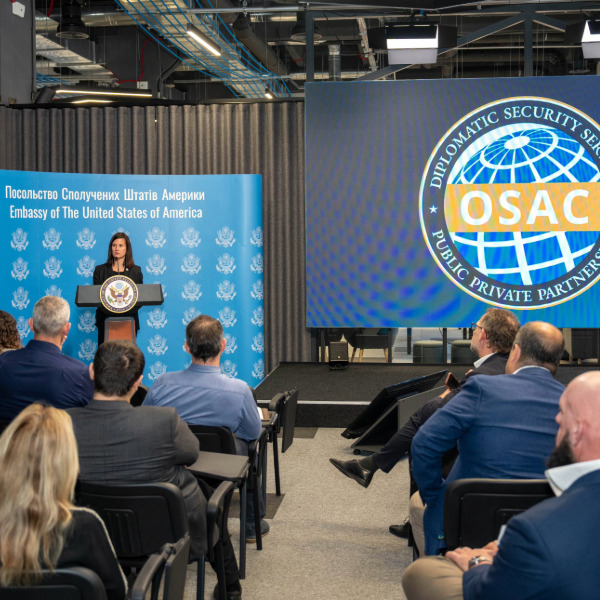

India 2020 Crime & Safety Report: Hyderabad
India 2020 Crime & Safety Report: Hyderabad
This is an annual report produced in conjunction with the Regional Security Office at the U.S. Consulate General in Hyderabad. OSAC encourages travelers to use this report to gain baseline knowledge of security conditions in southeastern India. For more in-depth information, review OSAC’s country-specific page for original OSAC reporting, consular messages, and contact information, some of which may be available only to private-sector representatives with an OSAC password.
Travel Advisory
The current U.S. Department of State Travel Advisory at the date of this report’s publication assesses most of India at Level 2, indicating travelers should exercise increased caution due to crime and terrorism. Some areas have increased risk: do not travel to the state of Jammu and Kashmir (except the eastern Ladakh region and its capital, Leh) due to terrorism and civil unrest; and do not travel to within ten kilometers of the border with Pakistan due to the potential for armed conflict. Review OSAC’s report, Understanding the Consular Travel Advisory System
Overall Crime & Safety Situation
Crime Threats
The U.S. Department of State has assessed Hyderabad as being a MEDIUM-threat location for crime directed at or affecting official U.S. government interests. While much of the crime is generally non-violent, Hyderabad does experience a full range of criminal activity. Petty crime (e.g. theft of personal property) is most common, particularly on trains, buses, and crowded streets. Criminal acts can occur at local markets and tourist areas. Foreigners can be favorable targets because criminals may assume they are carrying a considerable amount of cash, and are easily distracted. Pickpockets can be very adept; women have reported having their bags snatched, purse straps cut, or the bottom of their purses slit in an attempt to steal belongings. Thefts of belongings can occur while in transit, particularly in major tourist areas, on overnight trains, and in train stations. Be especially cautious in train stations, tourist sites, market places, festivals, and marginal areas of the city.
The areas surrounding the historic monument of Charminar (popular with tourists and market-goers), and the Old City district of Hyderabad are special challenges for travelers. Due to heavy crowds and extremely congested vehicle traffic in the narrow and confined spaces of the Old City, personal space is non-existent, and the risk of pickpocketing rises. Review OSAC’s report, All That You Should Leave Behind.
Although violent crimes are generally uncommon, crimes against women remain a top security concern. Most crimes reported against women have been among local residents exclusively; a large portion involve domestic disputes. Occasionally, local women riding motorbikes have had jewelry snatched by passing riders. Although there has been a increase in rape and sexual harassment reports, this may be attributed to an increased willingness to report incidents, not necessarily to an increase in occurrences. Sexual assault remains a top priority and target of state and city police officials. For more information, please review OSAC’s report, Female Personnel & Traveler Security in India.
A number of foreigners have fallen prey to property scams, usually when they become convinced to invest in property along with an Indian partner. The trend involves the Indian partner using a false pretext to make a claim on the entire property, generally after construction or restoration is complete, or offering. Other scams target younger travelers and involve suggestions that the traveler can make money by transporting gems or gold (either of which can result in arrest) or by taking delivery abroad of expensive carpets, supposedly to avoid customs duties. The scam artists describe profits that will occur upon delivery of the goods, and require the traveler to pay a "deposit" as part of the transaction. Review OSAC’s reports, The Overseas Traveler’s Guide to ATM Skimmers & Fraud and Taking Credit.
Review OSAC’s reports, Hotels: The Inns and Outs and Considerations for Hotel Security
Refrain from taking pictures of Indian Government facilities, train stations, airports, power plants, or other key sites receiving protection from the Government of India. Review OSAC’s report, Picture This: Dos and Don’ts for Photography.
Cybersecurity Issues
Hyderabad is a major hub of the information technology (IT) sector in India. The large presence of IT companies and IT skilled workforce can create an environment of increased cybersecurity risk. Theft of financial information and identity theft have become a significant concern in India. U.S. citizens have been arrested and prosecuted for possession of satellite phones, which is prohibited in India. Review OSAC’s reports, Cybersecurity Basics, Best Practices for Maximizing Security on Public Wi-Fi, Traveling with Mobile Devices: Trends & Best Practices, and Satellite Phones: Critical or Contraband?
Transportation-Safety Situation
Road Safety and Road Conditions
Main roads are in fair condition, but the Hyderabad metropolitan area’s transportation infrastructure struggles to keep pace with its rapid population growth. The result is heavy traffic congestion with poorly maintained back, residential, and access roads. Heavy traffic is normal during rush hour and includes (but is not limited to) overloaded trucks/buses, scooters, pedestrians, bullock/camel carts, bicycles, and free-roaming livestock. Road conditions worsen during the monsoon season due to flooding and erosion.
Driving is a challenge. Accidents are common due to lack of traffic enforcement, road signage, and general disregard for traffic laws. While driving, expect to meet local transportation traveling in the wrong direction, often without lights. Approximately half of deaths on Indian roads, including in Hyderabad, are among vulnerable road users: motorcyclists, pedestrians, and cyclists. Exercise extreme caution when crossing streets, even in marked pedestrian areas. Stay alert, and drive defensively.
Drivers must hold either a valid Indian driver’s license or a valid international driver’s license. Because of difficult road and traffic conditions, consider hiring a local driver. Driving in rural areas after dark can be very challenging and hazardous. Review OSAC’s reports, Traveler’s Guide to Indian Transportation Security, Road Safety Abroad, Driving Overseas: Best Practices, and Evasive Driving Techniques; and read the State Department’s webpage on driving and road safety abroad.
Public Transportation Conditions
The growth of Hyderabad’s population has placed strains on all transport systems in the city. The travel demand far exceeds the supply of transport infrastructure and services. Most bus and train services are overcrowded and in disrepair. During peak travel hours, buses, trains, and rickshaws are overwhelmed. Hyderabad continues to expand its nascent metro system. While the metro lines are modern, clean, and relatively safe, use caution while riding. When traveling via intercity rail, lock your compartment if possible. If you must sleep, position your luggage in manner so that you are awakened if someone attempts to tamper with it. Do not be afraid to alert authorities if you feel threatened in any way. Extra police often ride trains on routes where crime is a serious problem. Taxis and private vehicle services are better regulated and carry a better safety record than buses and rickshaws. Only hire reliable cars/drivers, and avoid traveling alone in hired taxis – especially during the hours of darkness. Ride-sharing apps (e.g. Uber and Ola) are becoming popular, and offer features to call for assistance in the event of an emergency. Review OSAC’s report Safety and Security in the Share Economy.
Only take taxis clearly identified with official markings, and beware of unmarked cabs. Obtaining taxis from hotels and kiosks at airports is preferable to hailing them on the street. Most hotels can arrange airport pickups and drop-offs as part of your room reservation. Beware of taxi drivers and others, including train porters, who solicit travelers with offers of cheap transportation/hotels. Travelers accepting these offers have frequently found themselves the victims of scams, including transfers to disproportionately expensive hotel rooms, unwanted "tours," unwelcome "purchases," and even threats when the tourists try to decline to pay. Review OSAC’s report, Security In Transit: Airplanes, Public Transport, and Overnights.
Aviation/Airport Conditions
The Hyderabad Rajiv Gandhi International Airport (HYD) is modern and supported by an abundance of Central Industrial Security Force and police. Take particular care with bags in the arrival/departure areas outside the airport. Unlicensed taxi drivers often approach travelers arriving at the airport offering rides; if you require a taxi service, decline these offers and use one of the multiple legitimate taxi kiosks located inside the airport.
Upon leaving the airport building, take precautions because of the large crowds and chaotic atmosphere, which is ideal for pickpockets. When coming out of the airport, stay away from anyone offering cheap residential accommodation or transportation. If you require assistance with luggage, make sure porters are airport-accredited and identifiable by their uniform. In addition to safeguarding luggage, exercise extreme diligence in maintaining positive control over your travel and identity documents.
Terrorism Threat
The U.S. Department of State has assessed Hyderabad as being a HIGH-threat location for terrorism directed at or affecting official U.S. government interests. The city has experienced terrorist attacks in the past. Areas generally targeted included crowded, public venues. Although U.S. citizens and foreigners were not specific targets, do not be complacent; remain watchful for any unusual/suspicious events.
The Naxalites/Maoists have a long history of conflict with state authorities, including frequent attacks on local police, paramilitary forces, and government officials. There have been no direct security concerns for Hyderabad or for the specific targeting of U.S. travelers. However, Naxalites have attacked symbolic targets that have included Western companies and civilians suspected of cooperating with police/government officials. Naxalite/Maoist violence occurs primarily in rural areas near the Chhattisgarh state border with Telangana, Andhra Pradesh, and Odisha states. There have been concerns that Maoist rebels may spread their activities deeper into the states of Telangana and Andhra Pradesh, but authorities have deterred such actions to date. In 2018 in Andhra Pradesh, a current and former Member of the Legislative Assembly died in an attack attributed to Naxal assassins.
There continues to be concern regarding violence from indigenous radical Islamic groups, most notably the Indian Mujahedeen (IM). IM is responsible for dozens of bomb attacks, and has killed hundreds of civilians. IM's goal is to carry out terrorist actions against non-Muslims in furtherance of its ultimate objective of an Islamic Caliphate across South Asia.
Reports of arrests involving ISIS-linked subjects in the Hyderabad area are a reminder of the need to maintain security awareness and remain vigilant.
Anti-U.S./Anti-Western Sentiment
Anti-Western terrorist groups and Islamist extremist groups, some on the U.S. government's list of foreign terrorist organizations, are active in India, including Harakat ul-Mujahidin (HUM), Jaish-e-Mohammed (JEM), Lashkar-e Taiba (LT or LeT), Harkat-ul-Jihad-i-Islami (HUJI), and al-Qa’ida in the Indian Subcontinent (AQIS). Past attacks across India have targeted public places Westerners frequent, such as higher-end hotels, trains, train stations, markets, cinemas, mosques, and restaurants in large urban areas. Attacks have taken place during the busy evening hours in markets and other crowded places, but could occur at any time; past attacks in Hyderabad have occurred at an amusement park, a mosque, and a street market. While the last bombings in Hyderabad occurred in 2013, be aware that the potential always exists for new attacks .
Political, Economic, Religious, and Ethnic Violence
The U.S. Department of State has assessed Hyderabad as being a MEDIUM-threat location for political violence directed at or affecting official U.S. government interests.
Civil Unrest
Demonstrations/protests/celebrations are common and generally non-aggressive, but the potential exists for them to turn violent. Demonstrations and general strikes (bandhs) may impact city operations and strain security resources. Local demonstrations can begin spontaneously and escalate with little warning, disrupting transportation systems and city services, and posing risks to travelers.
Authorities occasionally impose curfews and/or restrict travel. Avoid demonstrations and rallies, as they have the potential for violence, especially immediately preceding and following elections and religious festivals. Review OSAC’s report, Surviving a Protest.
Religious/Ethnic Violence
Large religious ceremonies that attract thousands of people can result in dangerous, often life-threatening stampedes.
Tensions between castes and religious groups can result in disruptions and violence. The potential exists for communal violence between Hindu and Muslim groups, especially around polarizing issues such as the designation of religious landmarks or sites. Such clashes are often spontaneous, leaving non-participants vulnerable during the fighting.
Post-specific Concerns
Environmental Hazards
Natural disasters can occur, usually in the form of flooding during the monsoon season (June-September). Hyderabad’s streets can see temporary, low-level flash flooding that hampers travel and causes heavy traffic congestion and delays. Parts of Andhra Pradesh can receive particularly heavy rainfall. Cyclones have made landfall at Visakhapatnam in Andhra Pradesh, and in Odisha. High winds, storm surge, and inland flooding occur, often impacting transportation infrastructure, public utilities, and food & water supplies for days.
Economic Espionage/Intellectual Property Theft
Do not buy counterfeit and pirated goods, even if they are widely available. Not only are the bootlegs illegal in the U.S., by purchasing them you may be breaking local law. Some vendors sell carpets, jewelry, gemstones, or other expensive items that may not be of the quality promised. Deal only with reputable businesses, and do not hand over your money unless you are certain that goods being shipped are the goods you purchased.
Critical Infrastructure
Refrain from taking pictures of Indian Government facilities, train stations, airports, power plants, or other key sites receiving protection from the Government of India. Review OSAC’s report, Picture This: Dos and Don’ts for Photography.
Personal Identity Concerns
Female travelers should use caution when traveling alone. Police officials recommend that foreign travelers register with the local police when traveling to their district. Observe stringent security precautions, including avoiding use of public transport after dark without the company of known and trustworthy companions. Restrict evening entertainment to well-known venues and avoid walking in isolated areas alone at any time of day. Carry a mobile phone with pre-programmed emergency contact numbers, and respect local dress and custom, with an emphasis on dressing conservatively. Review the State Department’s webpage on security for female travelers.
In September 2018, the Supreme Court of India struck down a colonial-era section of the Indian Penal Code, which had criminalized same-sex relations. The LGBT community still faces discrimination and violence in many sectors of society, particularly in rural regions. A significant amount of homophobia remains among the Indian populace, with around half of Indians objecting to same-sex relationships. Crimes against the LGBTI+ community are frequent. Review the State Department’s webpage on security for LGBTI+ travelers.
While in India, individuals with disabilities may find accessibility and accommodation very different than in the United States. Despite legislation that all public buildings and transport be accessible for disabled people, accessibility remains limited. Review the State Department’s webpage on security for travelers with disabilities.
Those planning to engage in religious proselytizing must have a "missionary" visa. Immigration authorities have determined that certain activities, including speaking at religious meetings to which the general public is invited, may violate immigration law without a missionary visa. Foreigners with tourist visas who engage in missionary activity are subject to deportation and possible criminal prosecution. The states of Odisha, Chhattisgarh, Gujarat, Himachal Pradesh, Madhya Pradesh, and Arunachal Pradesh have legislation that regulates or places restrictions on conversion from one religious faith to another. Those intending to engage in missionary activity should seek legal advice to determine whether the activities they intend to pursue are permitted under Indian law. Review OSAC’s report, Freedom to Practice, and the State Department’s webpage on security for faith-based travelers.
Drug-related Crimes
Most of the drugs that are illegal in the U.S. are illegal in India. Some drug laws are stricter than U.S. laws. Indian officials conduct major anti-drug operations, especially at transportation hubs. Undercover narcotics officers frequent clubs and hotels in attempts to apprehend drug users and dealers. Several U.S. citizens have been arrested at Indian airports for attempting to smuggle illegal drugs from India. All claimed that they did not realize they were carrying narcotics. Never transport or mail packages that do not belong to you, and maintain direct control of your luggage at all times.
Kidnapping Threat
Kidnapping of foreigners is rare but has occurred. Travelers should remain vigilant and maintain situational awareness. Kidnappings of children and women in the local community occur with some frequency. Review OSAC’s report, Kidnapping: The Basics.
Other Issues
Refrain from taking pictures of government facilities, train stations, airports, power plants, or other key sites receiving protection from the government. Review OSAC’s report, Picture This: Dos and Don’ts for Photography.
Before traveling to or from India, inspect all bags and clothing thoroughly to ensure they do not inadvertently contain prohibited items. Authorities have arrested or detained several U.S. citizens when airport security officials discovered loose ammunition (even spent individual bullets and casings) or weapons in their luggage. If you have loose ammunition or bullets (including empty bullet shells used in souvenirs) on your person or in your bags, authorities could charge you with violation of the Indian Arms Act, incarcerate you, and/or deport you from India. Read the State Department’s webpage on customs and import restrictions for information on what you cannot take into or out of other countries.
Police Response
The emergency line in India is 100. U.S. citizen victims of crime should contact the local police first for immediate assistance, and then the nearest U.S. Embassy/Consulate. For violent crimes, the Consulate does offer services and guidance to appropriate medical care and assistance in contacting family members or friends. For local first responder contact information, refer to the Consulate’s Emergency Assistance page. As a part of a citizen friendly and responsive policing program, Hyderabad City Police launched a mobile app titled "HAWK EYE."
Victims of crime must obtain a copy of the police report (FIR) from local police when reporting the incident. Local authorities generally are unable to take any meaningful action without the FIR.
If you lose your passport, immediately report it to the police in the location where your passport was stolen. The Indian government requires a police report to reobtain a lost or stolen exit visa. Although the Embassy/Consulate can replace a stolen or lost passport, the Ministry of Home Affairs and the Foreigners Regional Registration Office (FRRO) are responsible for approving an exit visa. This process can take three to four working days.
Traffic congestion constrains the ability of Consulate officials and Indian emergency responders to aid travelers anywhere in Hyderabad quickly.
U.S. citizens arrested in India have a right to notify, or have officials notify, the nearest U.S. Embassy/Consulate of their arrest. Insist on this right away, since it is often overlooked. Though the Embassy/Consulate cannot intervene in legal matters, they can provide information on local legal counsel and the local justice system. Additionally, American Citizen Services’ officers can visit you if you are incarcerated and can serve as a liaison with parties approved by you. Download the State Department’s Crime Victims Assistance brochure.
The police do an effective job of managing large-scale protests, and are responsive to security requests. However, overall police assistance is slow compared to Western standards, especially with extended response times. Once a suspect is under arrest, the time for a case to be heard in court is often several years. For more information, see Hyderabad City Police website.
Medical Emergencies
The medical emergency number is 108. The quality of medical care in India varies considerably. Medical care in the major population centers approaches and occasionally meets Western standards, but adequate medical care is usually very limited or unavailable in rural areas. For medical assistance, refer to the Consulate’s Medical Assistance page.
Medical tourism is a rapidly growing industry. Companies offering vacation packages bundled with medical consultations and financing options provide direct-to-consumer advertising over the internet. These packages often claim to provide high-quality care, but the actual quality is highly variable. People seeking health care should understand that India’s medical system operates differently from those in the U.S. and is not subject to the same rules, regulations, or oversight. Refer to OSAC’s report, Medical Tourism Surging. Anyone interested in traveling for medical purposes should consult their local physician before travel, and refer to information from CDC.
Do not assume your insurance will provide coverage while overseas. It is very important to verify coverage before you leave the United States. In many places, doctors and hospitals expect payment at the time of service. Your regular U.S. health insurance may not cover doctor and hospital visits. If your policy does not go with you when you travel, it is a very good idea to take out another one for your trip. The U.S. Department of State strongly recommends purchasing international health insurance before traveling internationally. Review the State Departments webpage on insurance overseas.
Before going to India, travelers -- especially those with preexisting/complicated medical issues or pregnancy -- should identify adequate health care providers/facilities at their destination.
Dogs and bats create a high risk of rabies transmission in most of India. Vaccination is recommended for all prolonged stays, especially for young children and travelers in rural areas. It is also recommended for shorter stays that involve occupational exposure, locations more than 24 hours from a reliable source of human rabies immune globulin and rabies vaccine for post-exposure treatment, adventure travelers, hikers, cave explorers, and backpackers. Monkeys also can transmit rabies and herpes B, among other diseases, to human victims. Avoid feeding monkeys. If bitten, you should immediately soak and scrub the bite for at least 15 minutes and seek urgent medical attention.
Influenza is transmitted from November to April in areas north of the Tropic of Cancer (north India), and from June through November (the rainy season) in areas south of the Tropic of Cancer (south India), with a smaller peak from February through April; off-season transmission can also occur. All travelers are at risk. Influenza vaccine is recommended for all travelers during the flu season.
Outbreaks of avian influenza (H5N1 virus) occur intermittently in eastern India, including West Bengal, Manipur, Sikkim, Andhra Pradesh, Telangana, and Assam.
Malaria prophylaxis depends on time of year and area the traveler is visiting. Please consult the CDC website for more information. Dengue fever presents significant risk in urban and rural areas. The highest number of cases is reported from July to December, with cases peaking from September to October. CDC recommends taking insect precautions such as wearing long-sleeved shirts and mosquito repellent. Tuberculosis is an increasingly serious health concern in India. The CDC offers additional information on vaccines and health guidance for India.
OSAC Country Council Information
The Country Council in Hyderabad meets twice a year. Interested private-sector security managers should contact OSAC’s South & Central Asia team with any questions.
U.S. Consulate Contact Information
Paigah Palace, 1-8-323 Chiran Fort Lane, Begumpet, Secunderabad, Telangana, 500003
Hours of Operation: 0830-1700, Monday-Friday
Tel: +91-40-4033-8300
Website: https://in.usembassy.gov/embassy-consulates/hyderabad/
Other U.S. Diplomatic Posts in India
- · Embassy New Delhi, Shantipath, Chanakyapuri, New Delhi 110021. +91-11-2419-8000.
- · Consulate Chennai, 220 Anna Salai Rd, Chennai 600006. +91-44-2857-4000.
- · Consulate Mumbai, C-49, G-Block, Bandra Kurla Complex, Bandra East, Mumbai 400051. +91-22-2672-4000.
- · Consulate Kolkata, 38A, J.L.Nehru Road, Kolkata 700071. +91-33-3984-6300.
Helpful Information
Before you travel, consider the following resources:
- · India Country Information Sheet